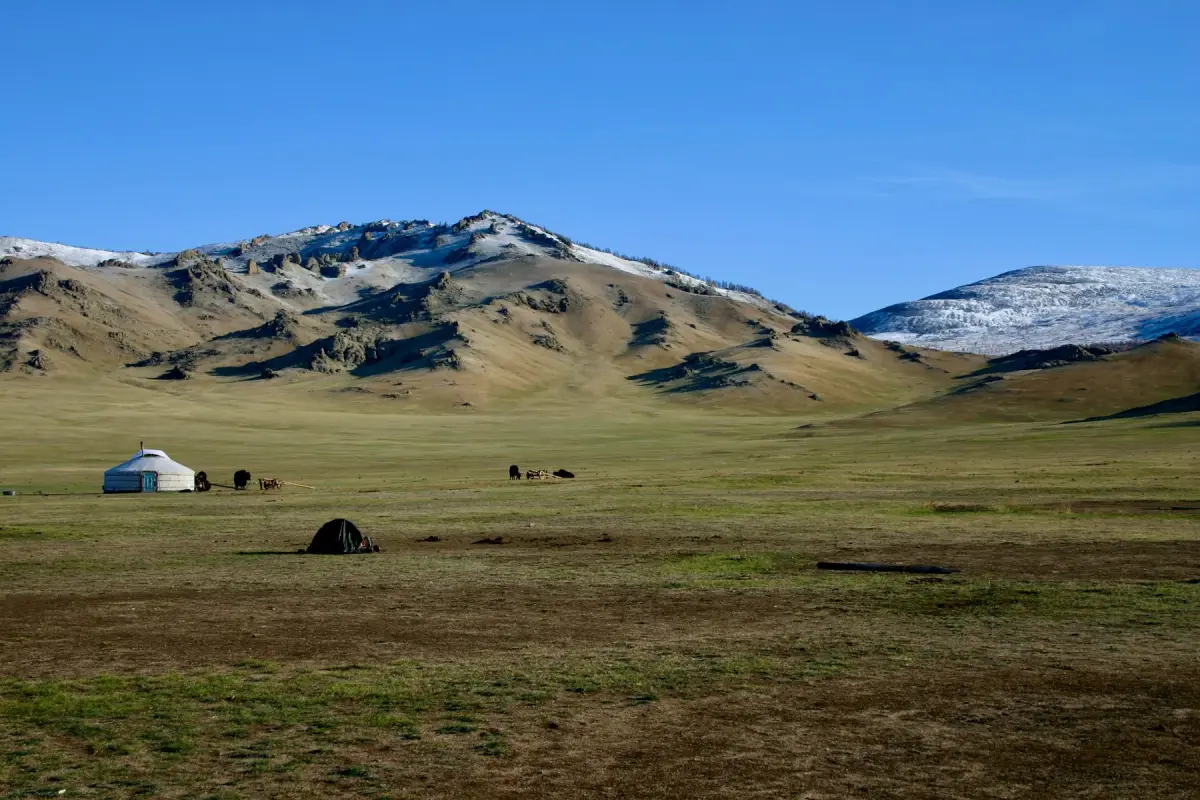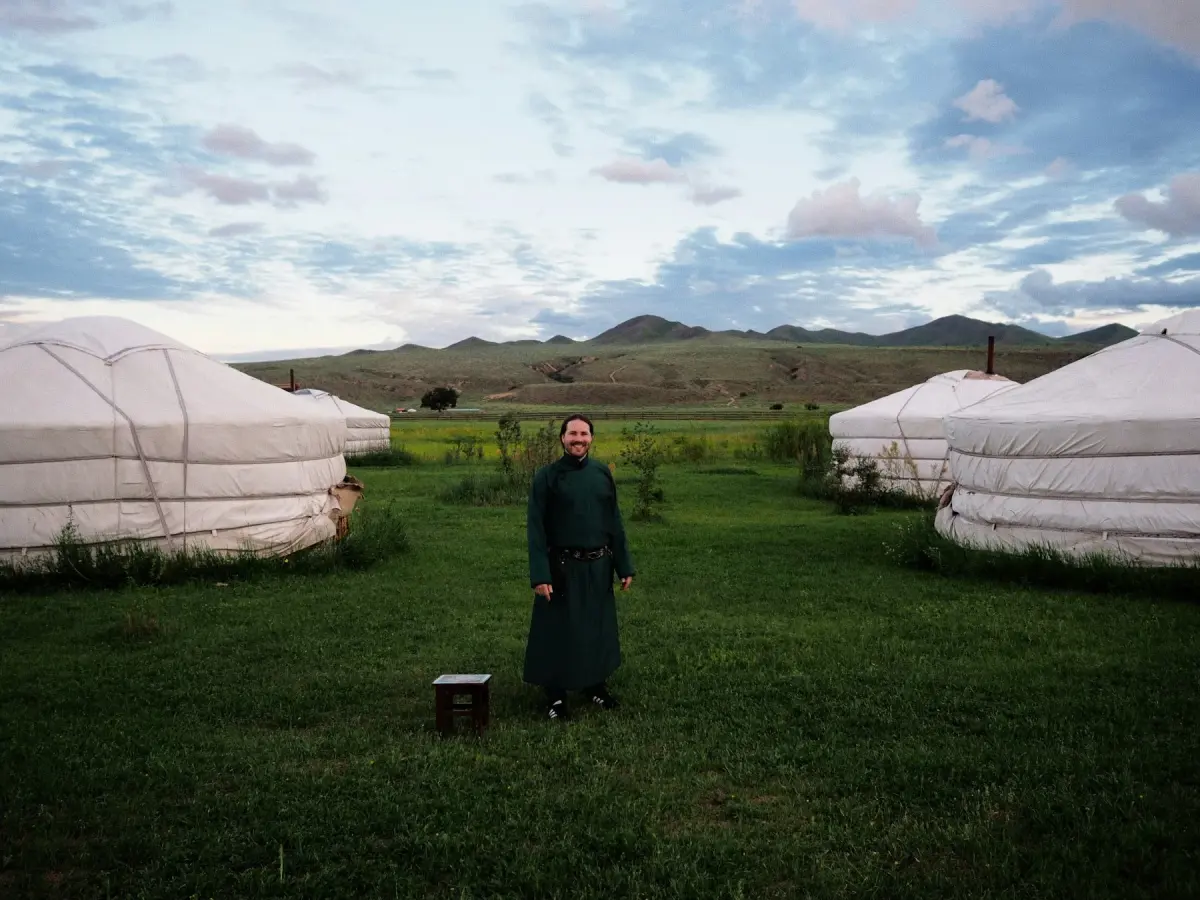
After several days among green valleys and open pastures, the landscape suddenly changes. Black lava fields, an ancient crater, and scenery that feels more like Iceland than Central Asia begin to appear on the horizon.
Khorgo Volcano has been dormant for thousands of years, yet the surrounding landscape still looks as though the last eruption happened only recently. Here, you can climb to the rim of the crater, walk across ancient lava flows, and watch the sunset beside a large lake that was formed by volcanic activity.
Most travelers come to Mongolia for its endless steppes, the Gobi Desert, or the chance to experience nomadic culture. The Khorgo region rarely becomes the main reason for a trip. And that is exactly why it surprises so many people. Hidden among vast grasslands and herds of horses is a completely different side of Mongolia — rugged, unusual, and far removed from the image most visitors expect.
If you enjoy places that challenge expectations, Khorgo Volcano and Khorgo-Terkhiin Tsagaan Nuur National Park may become one of the most memorable discoveries of your journey through Mongolia.
Khorgo Volcano
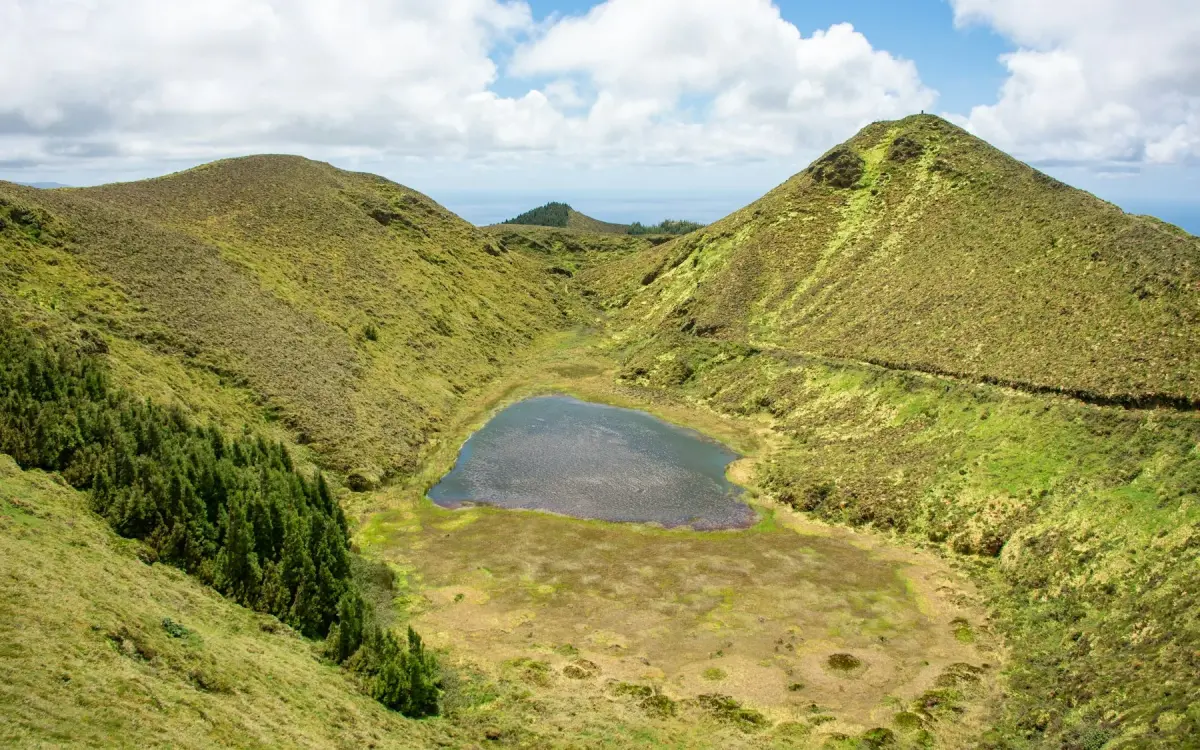
The extinct Khorgo Volcano rises within Khorgo-Terkhiin Tsagaan Nuur National Park. It is believed to be several thousand years old, and its last eruption belongs to the distant past. Today, it is one of the most fascinating natural landmarks in central Mongolia.
The hike to the summit requires no special preparation and takes around thirty minutes. The trail gradually climbs to the rim of the crater, where panoramic views open across the surrounding steppe, lava fields, and Lake Terkhiin Tsagaan. The crater itself is remarkably well preserved. Standing on its edge, it is easy to imagine the powerful volcanic forces that once shaped this region.
It is neither Mongolia’s highest peak nor its most challenging hike, but it offers a remarkable reminder of how diverse the country’s landscapes can be.
Lava Fields
The eruptions that formed Khorgo Volcano also created vast lava fields stretching across the surrounding area.
Today, these fields resemble frozen waves of black stone extending for kilometers. In some places, grasses and small plants have begun to reclaim the landscape, but the overall impression remains strikingly otherworldly.
Lava tunnels and caves, formed as molten rock cooled and hardened, can still be explored in several locations. Walking across these ancient volcanic formations, it is hard to believe that green pastures filled with yaks and horses begin just a few kilometers away.
Lake Terkhiin Tsagaan
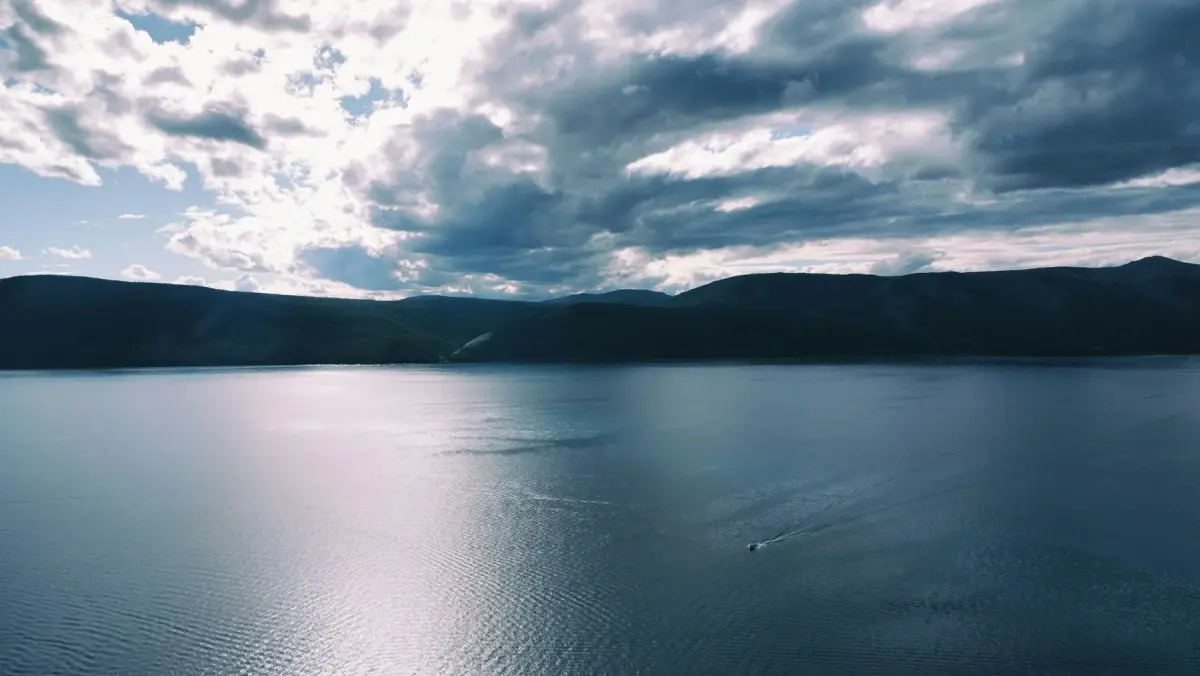
Near the volcano lies Lake Terkhiin Tsagaan Nuur, one of the most beautiful lakes in central Mongolia.
According to geological studies, the lake was formed when lava flows blocked the course of an ancient river. Today, it fills much of the valley and creates a striking contrast with the surrounding volcanic terrain.
On clear days, the water reflects the surrounding hills and the silhouette of the volcano. Along the shoreline, visitors may encounter birds, grazing yaks, and the occasional yurt belonging to local nomadic families. Unlike many famous destinations around the world, the area remains peaceful and uncrowded.
Khorgo-Terkhiin Tsagaan Nuur National Park
The volcano and lake are both part of one of Mongolia’s most interesting national parks.
Visitors come here not only to climb the crater but also to spend several days exploring the region. Small lakes, birdlife, open landscapes, and encounters with nomadic families all contribute to the experience.
Traveling through the park by vehicle is particularly rewarding. The scenery changes every few kilometers: lava fields give way to grasslands, rolling hills lead to lakeshores, and new panoramas constantly appear on the horizon.
When to Visit
The best time to visit the Khorgo region is from June to September.
During summer, roads are at their most accessible, temperatures are comfortable for hiking, and the steppes surrounding the lake turn bright green. July and August are especially beautiful, thanks to the contrast between vivid grasslands, deep blue water, and dark volcanic rock.
Spring and autumn bring more unpredictable weather but also fewer visitors.
Suggested Route
The journey to the Khorgo region is already part of the adventure. As you leave Ulaanbaatar behind, the landscape becomes increasingly open. Villages grow less frequent, and the vast Mongolian steppe begins to dominate the horizon. Along the way, there are opportunities to stop at nomadic settlements, watch herds of horses, and experience the immense scale that draws travelers to Mongolia.
By evening, arrive at Lake Terkhiin Tsagaan. After a long day on the road, a quiet walk along the shoreline is the perfect way to end the day. Spend the night in a yurt camp or guesthouse near the lake.
Dedicate the day to exploring the lake and its surroundings. The lake changes character throughout the day: mirror-like in the morning, deep blue under the midday sun, and glowing with warm colors at sunset.
Take time to walk along the shoreline, observe birdlife, photograph reflections in the water, or simply enjoy the silence. Even during the peak travel season, the area rarely feels crowded.
Today is devoted to the main attraction of the region. The hike to the crater rim is relatively short, but the views encourage visitors to stay much longer. On one side lies Lake Terkhiin Tsagaan; on the other stretch lava fields and the rolling landscapes of central Mongolia.
After exploring the crater, spend time walking across the ancient lava flows and visiting volcanic caves. The scenery is so unexpected that it sometimes feels as though you are somewhere between Iceland and Central Asia.
Leave this day free from strict plans. Explore lesser-known parts of the national park, drive through lava fields, stop at scenic viewpoints, and observe the daily life of local nomadic families.
Mongolia often reveals itself best during these unhurried moments. Sometimes the strongest memories come not from a famous landmark but from a road, a conversation, or an unexpected view beyond the next hill.
Spend your final full day at a slower pace. Watch the sunrise over the lake, take a walk through the surrounding landscapes, read a book beside the water, or simply observe how the light changes throughout the day.
Many travelers say that places like this help them understand the rhythm of Mongolia — a country where space and time seem to move differently.
After breakfast, continue onward to the Orkhon Valley, Lake Khuvsgul, the Gobi Desert, or another region of the country.
Khorgo is rarely the sole reason people travel to Mongolia, but it often becomes one of the most memorable parts of the journey.
Mongolia is known for its steppes and deserts, but the Khorgo region reveals another side of the country — volcanic, dramatic, and unexpected.
Climbing an ancient crater, walking across hardened lava flows, and spending evenings beside a vast mountain lake create a completely different image of Mongolia. Perhaps that is why so many travelers describe Khorgo as one of the most surprising discoveries of their trip.