After travelling through the heart of New Zealand’s North Island, you begin to realise that Rotorua, Waimangu, Taupō, and Tongariro are not four separate attractions. They are different chapters of the same story—one that the Earth reveals little by little.
That is why this route is best experienced in its natural order. Each day prepares you to understand what comes next.
Before You Go
The easiest way to complete this itinerary is by car. Plan for four days, giving yourself enough time to experience each place without feeling rushed.
The route can be enjoyed year-round, but the most pleasant conditions are generally between November and April. Keep in mind that weather in Tongariro National Park changes quickly in every season, so a waterproof jacket and warm layers are worth packing even in summer. If you plan to visit Waimangu, attend the Te Pō evening experience at Te Puia, or hike the Tongariro Alpine Crossing, it’s best to book in advance.
Day 1. Rotorua — Watching New Land Being Born
Begin your journey at Waimangu Volcanic Valley. Few places explain volcanic landscapes better than this one. The valley was created after the eruption of Mount Tarawera in 1886, making it one of the youngest geothermal landscapes on Earth.
Take your time here. Allow at least three hours to explore the walking trails. Stop at Frying Pan Lake, admire the striking colours of Inferno Crater, and continue to Lake Rotomahana. The experience is not about ticking off viewpoints but about slowly understanding how landscapes continue to evolve.
In the evening, head to Te Puia. While many visitors come during the day to see the geysers, the evening offers something deeper. Geothermal scenery becomes the backdrop for Māori culture, traditional carving, storytelling, and a hāngī dinner cooked using the Earth’s natural heat. After visiting Waimangu, the experience feels less like a performance and more like the next chapter of the journey.
Staying overnight in central Rotorua makes the evening easy to enjoy, with restaurants and the lakefront within walking distance.
Day 2. From Geothermal Landscapes to a Volcanic Lake
Leave Rotorua in the morning and drive toward Taupō. The journey takes just over an hour, but it is worth making a few stops along the way.
Your first stop should be Aratiatia Rapids. Several times each day, the hydroelectric dam releases water, transforming a quiet river into a roaring torrent within minutes. Timing your visit with one of these releases makes the experience far more dramatic.
A short drive away are Huka Falls. Their appeal comes not from height but from extraordinary power, as the Waikato River is forced through a remarkably narrow canyon.
Spend the afternoon in Taupō. Rather than rushing between attractions, simply enjoy the lakeshore. Walk along the waterfront, have dinner overlooking the water, and watch the changing colours of the lake at sunset. Only after visiting Rotorua does it become easy to appreciate that this peaceful lake fills the caldera of one of the world’s most powerful volcanic eruptions.
For dinner, Two Mile Bay Sailing Club, The Bistro, and Edgewater are all excellent choices. Staying overnight in Taupō is well worth it, as the atmosphere changes beautifully after day visitors leave.
Day 3. The Road to the Volcanoes
Spend a relaxed morning in Taupō before continuing south. A coffee by the lake is one of the simplest but most memorable ways to begin the day.
On your way to Tongariro National Park, make a short stop in Tūrangi, often called the gateway to the park.
For the night, there are three good options. National Park Village offers the best balance of accommodation, restaurants, and easy access to the walking trails. Whakapapa Village places you inside the national park itself, while Ohakune has more services but is slightly farther from the main volcanic walks.
For most travellers, National Park Village is the most practical choice.
Day 4. Tongariro
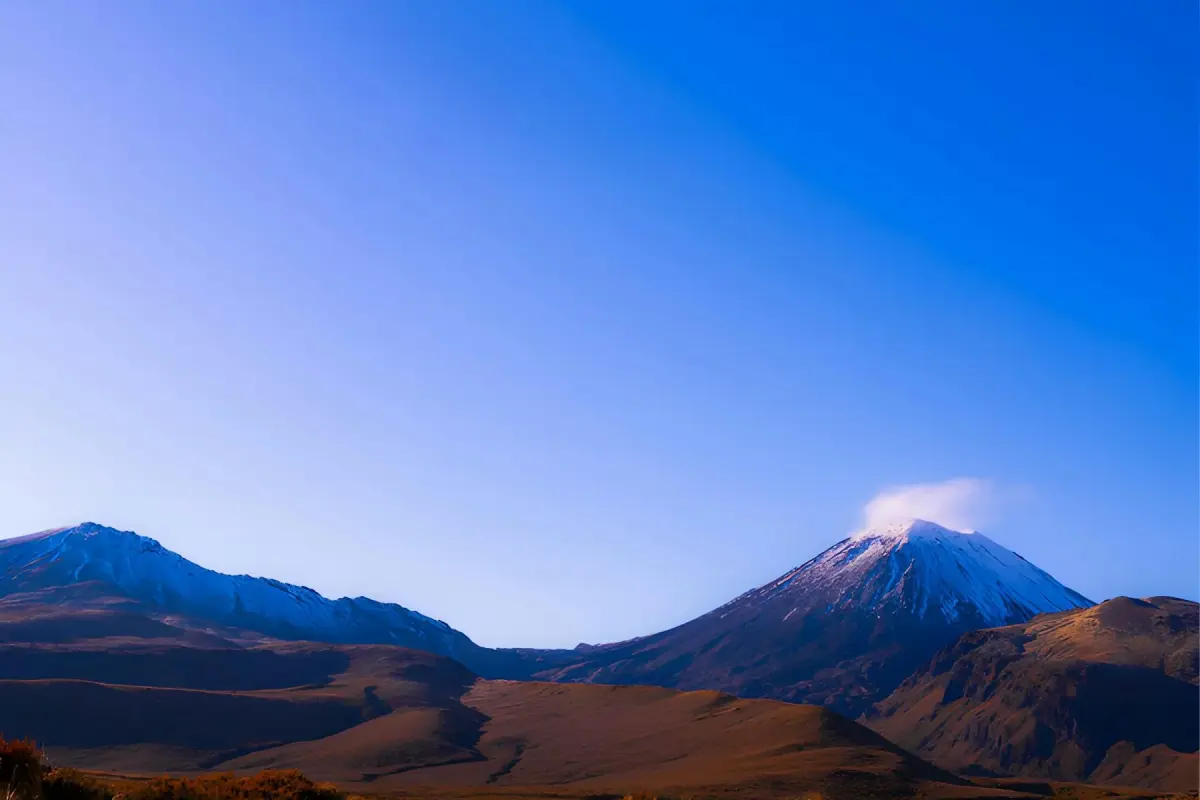
The final day belongs to the mountains.
If completing the Tongariro Alpine Crossing has long been on your travel list, this is one of the world’s great day hikes, famous for its volcanic craters, Emerald Lakes, and wide alpine landscapes.
However, it is far from the only way to experience Tongariro National Park. If your goal is to enjoy the volcanic scenery at a slower pace, several shorter walks reveal the same extraordinary landscape without requiring a full day’s hike.
The Taranaki Falls Track passes ancient lava flows before reaching a waterfall that drops over volcanic rock. The Silica Rapids Track leads through quiet streams and striking white mineral terraces. Meads Wall offers dramatic cliffs shaped by volcanic forces, while Tawhai Falls is a small but beautiful waterfall hidden among native forest.
The best choice is not necessarily the most famous trail, but the one that suits the kind of journey you want to have.
Ways to Adapt the Route
If you only have three days, you can shorten your stay in Taupō and continue toward Tongariro on the same day. The pace will be faster, but you’ll spend less time enjoying the lake itself.
If you have five days, consider adding another day around Tongariro National Park or visiting Wai-O-Tapu. While Waimangu tells the story of how this modern landscape was created, Wai-O-Tapu is famous for its vividly coloured geothermal pools and offers a different perspective on New Zealand’s geothermal activity.
A Few Tips That Will Make the Journey Better
Avoid visiting several geothermal parks in a single day. After the second one, the experiences begin to blur together, while Waimangu is best appreciated slowly.
Don’t leave Taupō immediately after visiting the waterfalls. A quiet evening by the lake does more to reveal the scale of the volcanic caldera than any information board ever could.
Stay flexible with your plans in Tongariro. Mountain weather changes rapidly, and clouds can transform the landscape within minutes. Choosing your walk once you arrive often leads to a much better experience.
Most importantly, don’t think of this journey as a checklist of attractions. Its greatest reward comes at the very end, when every stop suddenly connects with the next, and you realise you haven’t simply travelled between destinations—you’ve spent four days exploring different parts of one living volcanic system.