In southern Kamchatka, it is difficult to draw a clear boundary between the coastline and the mountain regions.
A road may follow the ocean for a while, then climb to a mountain pass, cross a volcanic area, and eventually return to the water.
Rivers begin on volcanic slopes and end in the Pacific Ocean. Weather arrives from the coast and changes as it moves inland. Routes connect bays, valleys, mountain passes, and volcanic plateaus into a single system.
Because of this, the ocean and the mountains in Kamchatka are rarely experienced as separate parts of the region.
Avacha Bay
For many journeys across Kamchatka, Avacha Bay becomes the starting point.
Petropavlovsk-Kamchatsky is located here. Fishing vessels leave the harbor, sea routes begin along the coast, and much of the region’s activity is concentrated around the bay.
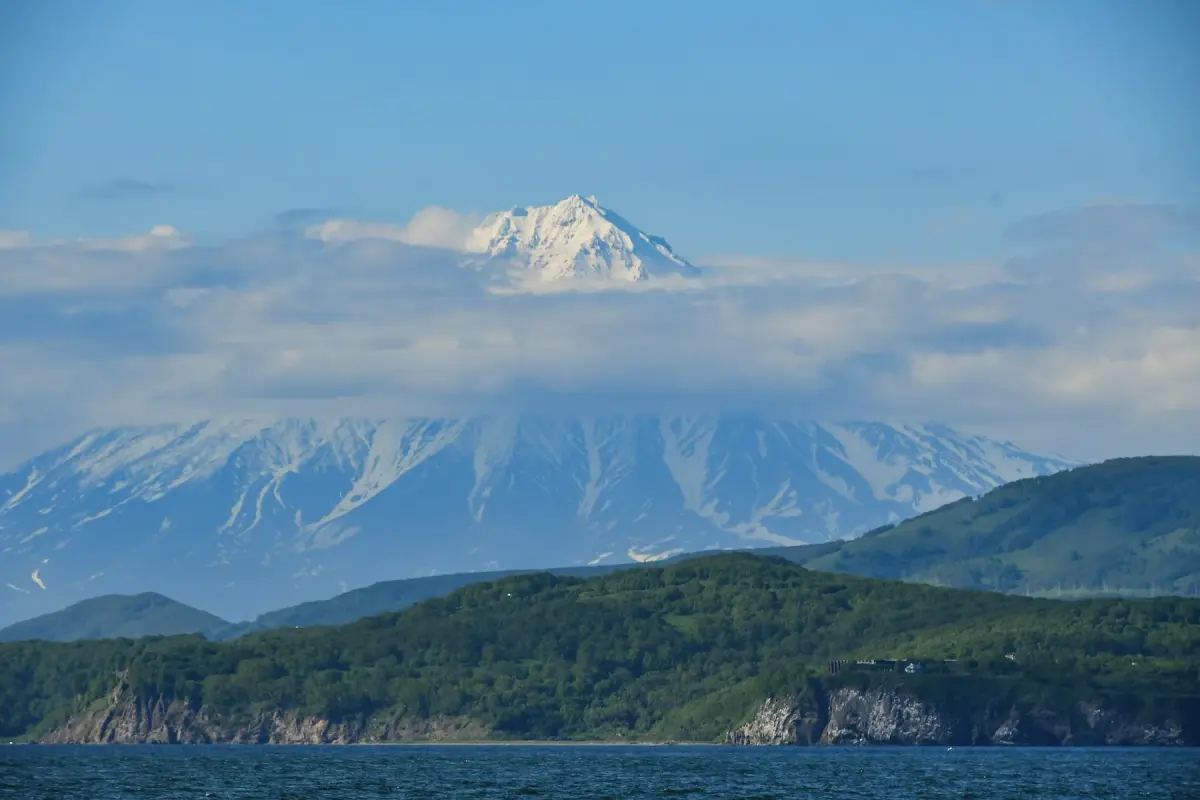
At the same time, volcanic massifs rise above the shoreline.
On clear days, they can be seen from different parts of the city, from the coast, and from the water.
The bay brings together several sides of Kamchatka at once: the sea, the city, and the mountains.
Many routes across the peninsula pass through this area.
Rivers Linking the Coast and the Volcanoes
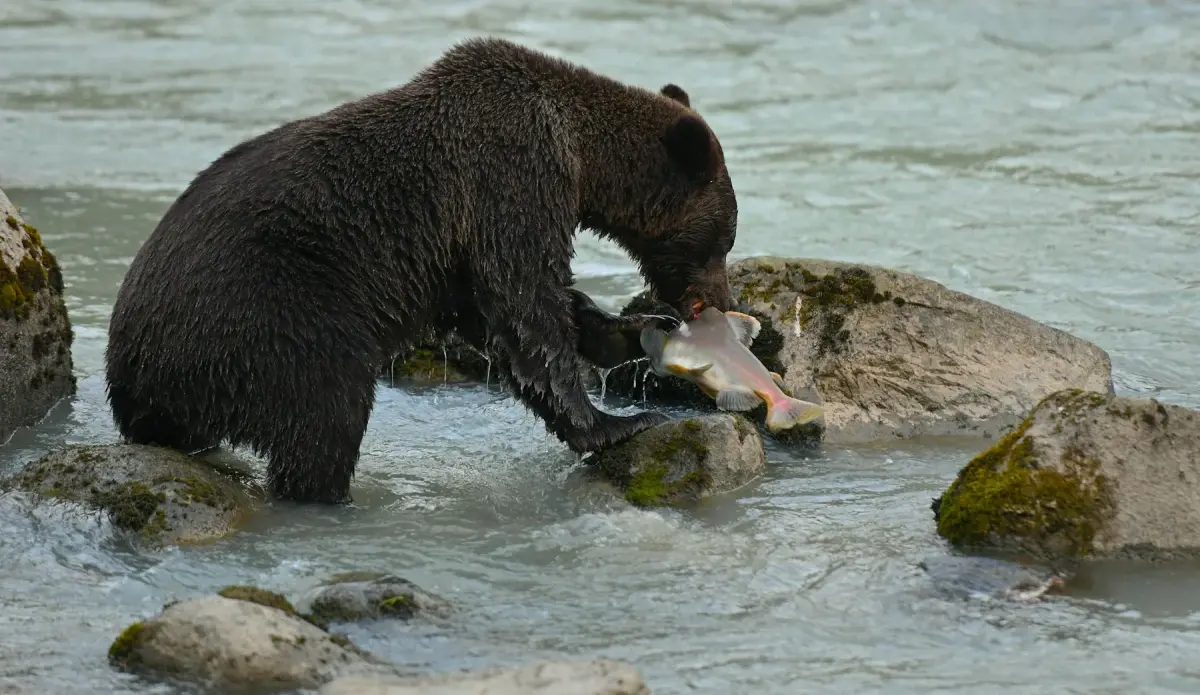
Most of Kamchatka’s rivers begin in the mountains.
Some originate on volcanic slopes, while others are fed by glaciers and high-altitude valleys.
From there, they flow through forests, plains, and wetlands before reaching the ocean.
On a map, these rivers appear as simple lines.
On the ground, they create valleys that become natural corridors for roads, trails, and travel routes.
In many parts of Kamchatka, river valleys provide the most practical way to move between different landscapes.
Khalaktyrsky Beach
Khalaktyrsky Beach lies not far from Petropavlovsk-Kamchatsky.
The drive is relatively short, yet the landscape changes quickly.
The city disappears behind you.
The coastline opens up, with volcanic sand stretching along the shore of the Pacific Ocean.
On clear days, volcanoes remain visible in the distance.
Even here, at the edge of the ocean, they remain part of the landscape.
The coast does not feel separate from the rest of Kamchatka. It feels connected to it.
Volcanic Areas Near the Coast
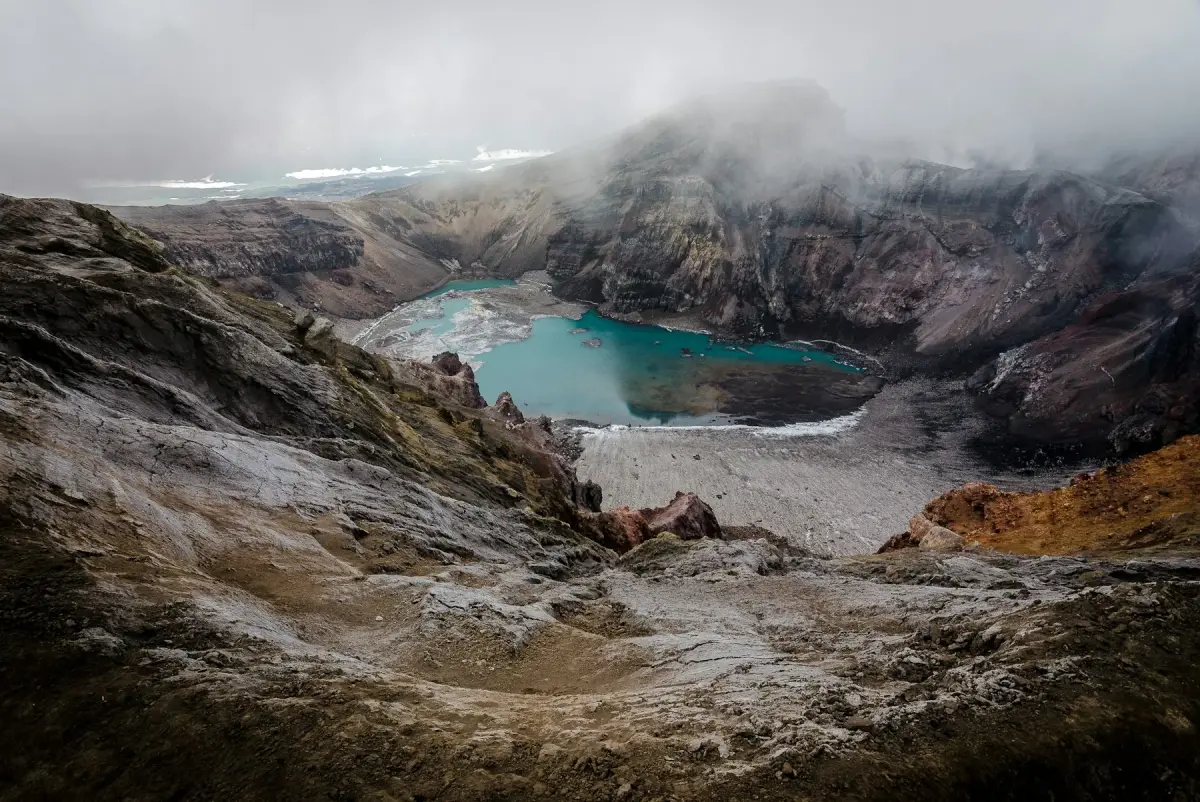
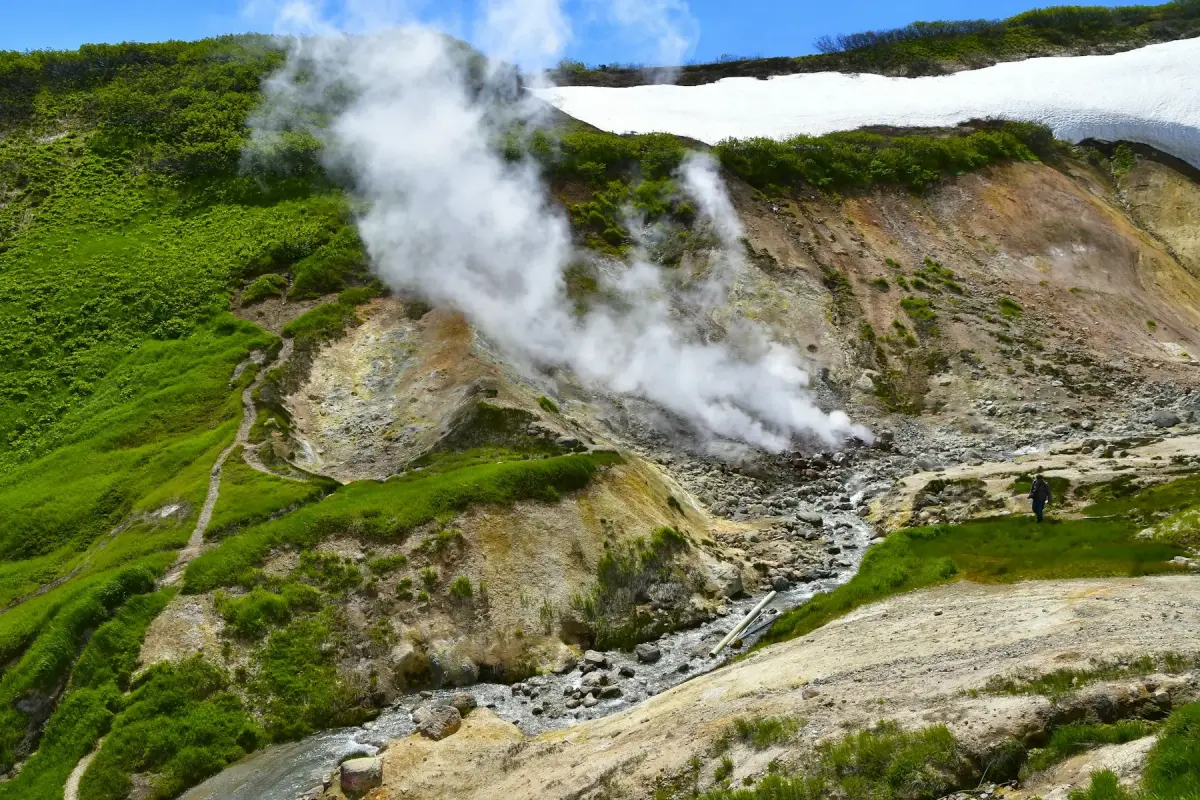
Many volcanic routes in Kamchatka begin surprisingly close to the ocean.
Avachinsky Volcano, Koryaksky Volcano, and Vilyuchinsky Volcano are all located in a part of the peninsula where mountain and coastal landscapes exist within relatively short distances of each other.
As elevation increases, vegetation, terrain, and weather conditions change.
Yet the ocean often remains visible from higher sections of the route.
On Kamchatka, the distance between the coast and the mountains is often shorter than it appears on a map.
Weather Arriving from the Ocean
Weather in Kamchatka is influenced by the Pacific Ocean as much as by the mountains themselves.
Clouds, fog, and precipitation frequently move inland from the coast.
One valley may be covered by low clouds while another, only a few dozen kilometers away, remains clear.
As a result, conditions can vary significantly within a single day’s journey.
Weather becomes part of the landscape alongside rivers, volcanoes, and the coastline.
Roads Between Bays and Passes
Routes across southern Kamchatka rarely follow a single type of terrain.
One section may run through a river valley.
The next may climb toward a mountain pass.
After that, the road may return to the coast or enter a volcanic region.
For this reason, journeys across the peninsula are often remembered not for individual destinations, but for the sequence of landscapes encountered along the way.
Each stretch of road reveals a different side of the region.
A Region Where Landscapes Intersect
In Kamchatka, it is difficult to consider the ocean, volcanoes, rivers, and mountains separately.
Rivers connect volcanic slopes to the coast.
Weather arrives from the ocean and shapes inland regions.
Roads pass through valleys, mountain passes, and coastal areas.
A single day’s route may cross several different landscapes.
As a result, many parts of Kamchatka are experienced not as isolated natural attractions, but as a region where different landscapes constantly interact with one another.
Suggested Route
After arrival, spend time exploring the city and the area around Avacha Bay. The day focuses on the coastline, the harbor, and a first introduction to southern Kamchatka.
A full day on the Pacific coast, exploring the shoreline and surrounding landscapes.
Travel to the area between Avachinsky and Koryaksky volcanoes. The day is dedicated to volcanic landscapes and walks through the surrounding terrain.
Cross mountain passes and explore another part of southern Kamchatka.
A day at sea along the coastline, focusing on the Pacific Ocean and coastal environments.
Explore the valleys, rivers, and routes that connect the coast with the volcanic interior of the peninsula.
An additional day set aside for weather-related changes or for returning to places that deserve more time.
Return to the city and conclude the journey.