Sometimes the most memorable places in a journey are the ones where nobody tells you to stop.
There is no viewpoint. No parking area. No sign with a famous name. Yet something catches your eye — a river winding through a valley, a herd of horses moving across a hillside, or evening light spilling over the grasslands. Almost without thinking, you slow down, pull over, and stay a little longer than planned.
The Orkhon Valley is full of moments like these.
People come here to see the Ulaan Tsutgalan Waterfall, explore one of Mongolia’s most important historical landscapes, or experience the country’s nomadic culture. But after a few days, many travelers realize that what they remember most is something else entirely. A small mountain pass between two camps. A cup of tea beside a river. A lone yurt on the horizon. A road that made them want to drive as slowly as possible.
In the Orkhon Valley, the journey rarely divides itself into destinations and transfers. Everything becomes part of the same experience.
A Valley That Encourages You to Slow Down
The Orkhon Valley is not a place that rewards rushing.
The landscape changes gradually. Wide pastures give way to rolling hills. Hills open into new valleys. The river disappears behind a bend and then reappears a few kilometers later.
Nothing feels dramatic or rushed. Yet this slow transformation of the landscape creates a journey that many people wish lasted just one day longer.
Eventually, speed stops feeling important.
A New View Beyond Every Hill
One of the defining features of the Orkhon Valley is its terrain.
There are no towering mountain walls or dramatic alpine passes. Instead, the road gently rises and falls across a series of hills and ridges, each revealing a slightly different view.
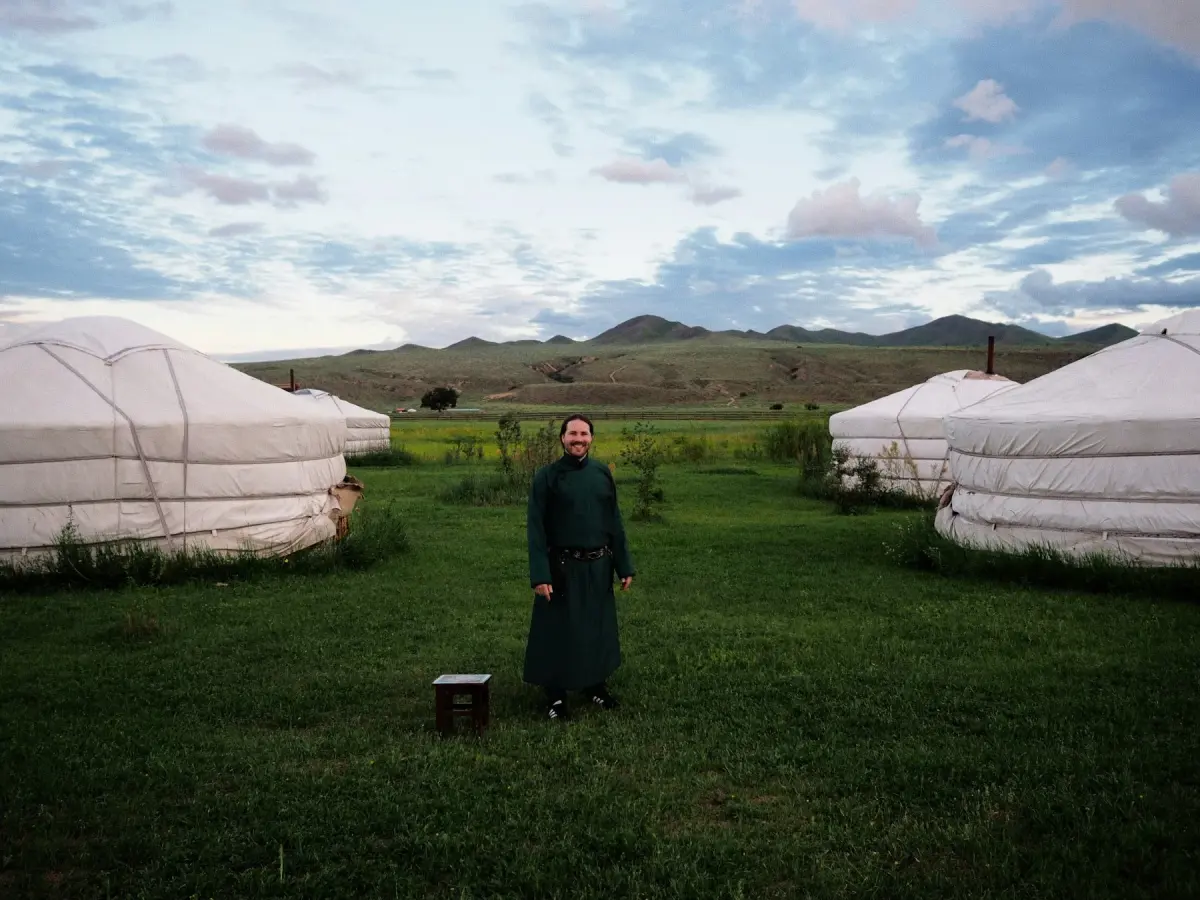
One moment, the Orkhon River curves through green meadows. A few kilometers later, rocky outcrops appear above the valley floor. Then a cluster of white yurts emerges in the distance.
It becomes surprisingly difficult to drive far without stopping. Every time you think you have seen the best view of the day, another one appears around the next bend.
Yurts That Belong to the Landscape
In many parts of the world, rural homes feel separate from the surrounding scenery.
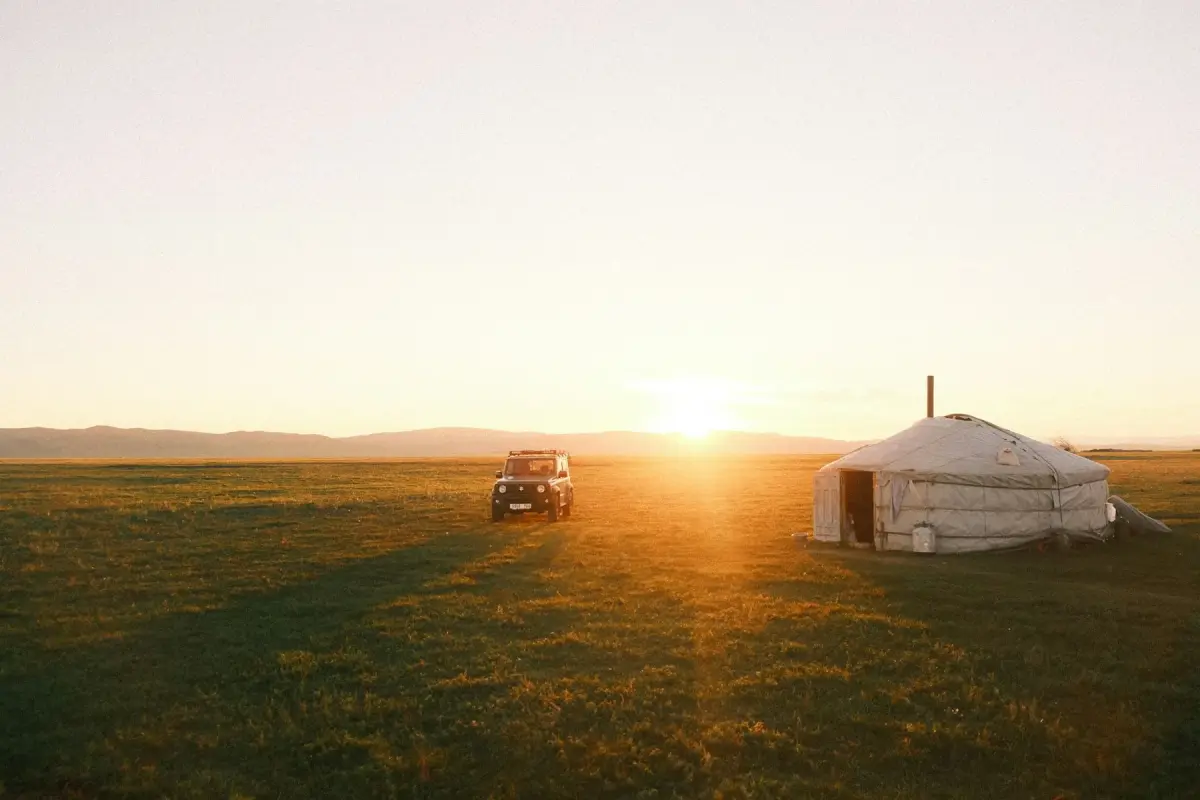
In Mongolia, yurts often seem like a natural extension of the landscape itself.
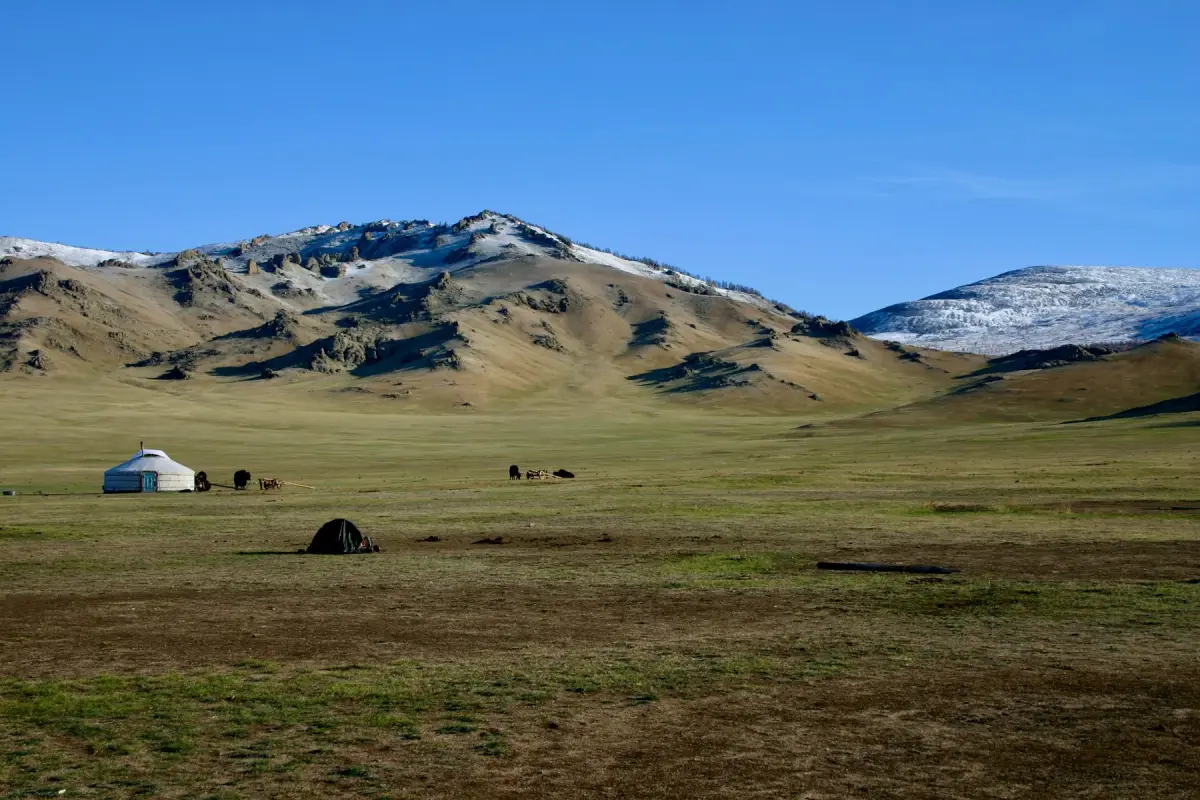
Some stand beside rivers. Others sit on isolated hillsides. Occasionally, it feels as though the nearest neighbors are several kilometers away.
Around them graze horses, sheep, and yaks. Nearby, you might spot motorcycles, solar panels, or satellite dishes. These small details are a reminder that Mongolia’s nomadic culture is not a relic of the past.
It is still part of everyday life.
Horses on the Horizon
After a while, horses become such a constant presence that you stop thinking of them as a special sight.
They appear everywhere.
Sometimes as distant silhouettes against the hills. Sometimes grazing close to the road. Sometimes moving across the valley in large herds.
The connection between Mongolia and horses stretches back centuries, and the Orkhon Valley remains one of the best places to witness that relationship firsthand.
These encounters are especially beautiful in the early morning and late afternoon, when the soft light adds depth and color to the landscape.
The Best Stops Are Not Marked on Any Map
Traveling through the Orkhon Valley teaches a simple lesson.
The most rewarding stops are often the ones you never planned.
A quiet riverbank where you decide to make tea. A small hill overlooking the valley. A stretch of road where the light suddenly becomes perfect.
There are usually no souvenir shops, visitor centers, or tour buses nearby.
Just a landscape that makes you want to stay a little longer.
The Light of the Orkhon Valley
If possible, try to see the valley twice: once in the early morning and again before sunset.
In the morning, a thin layer of mist may rise from the river as the first sunlight reaches the grasslands.
By midday, the valley feels open and expansive.
Then, as evening approaches, the landscape changes once more. Shadows grow longer, colors become warmer, and familiar places begin to look completely different.
Many travelers make a point of finishing the day at a viewpoint rather than on the road, simply to watch the changing light move across the valley.
Suggested Route
Leaving Ulaanbaatar behind, the landscape gradually opens into wide valleys, pastures, and nomadic settlements. Take your time and make frequent stops along the way. The Orkhon Valley quickly reveals itself as more than a single attraction — it is an entire region best explored at a slow pace.
Spend the evening in a yurt camp or guesthouse surrounded by open grasslands.
Today follows the river through some of the valley’s most scenic landscapes. Along the way, you will pass grazing horses, nomadic camps, and countless viewpoints overlooking the valley floor.
This is the perfect day for photography, short walks, and simply observing everyday life in rural Mongolia.
After breakfast, head toward one of the region’s best-known natural landmarks.
The waterfall is certainly worth visiting, but do not rush the journey. Some of the most memorable views are found on the road leading there rather than at the waterfall itself.
Spend the evening watching the light fade across the surrounding hills and grasslands.
Leave your final day intentionally open.
Return to a favorite viewpoint. Spend extra time beside the river. Stop at a nomadic camp. Follow a small road simply because it looks interesting.
The Orkhon Valley rarely feels like a completed itinerary. Instead, it leaves you with the sense that there are still countless roads waiting to be explored.
And perhaps that is exactly what makes it so memorable.