This route isn’t just a collection of famous sights. Each day builds naturally on the last. The lakes become more vivid, the mountains draw closer, and before long you find yourself pulling over again and again, even though you promised it would be “just one more stop.”
The best way to experience this journey is to start in Christchurch and finish in Queenstown. The main route takes about a week, though it can be completed in six days if you’re short on time. If you have longer, it’s well worth continuing to Milford Sound. Almost the entire drive follows well-maintained sealed roads, but having your own car makes all the difference, allowing you to stop at scenic viewpoints, quiet roadside lookouts, and places that buses simply pass by.
Day 1. Christchurch → Lake Tekapo
Your First Taste of the South Island
It’s worth leaving Christchurch in the morning. The first couple of hours may even feel a little underwhelming. Instead of dramatic mountain scenery, you’ll pass farmland, rolling paddocks, and small country towns. For a moment, you might wonder whether the photographs that inspired this trip were a little too good to be true.
That feeling disappears almost instantly.
As you round a bend, Lake Tekapo suddenly comes into view, its water so vividly blue that your first instinct is to pull over and check whether it really looks like that. It does. The colour isn’t enhanced by photographers or editing. It’s created by tiny particles of glacial rock flour suspended in the water after thousands of years of glacial movement.
The best-known landmark on the shore is the Church of the Good Shepherd. Most visitors photograph it from the same angle before moving on, but it’s worth wandering a little farther along the lakeshore. The crowds quickly thin out, the noise fades away, and the lake and mountains begin to feel very different when you’re no longer looking at them through a camera lens.
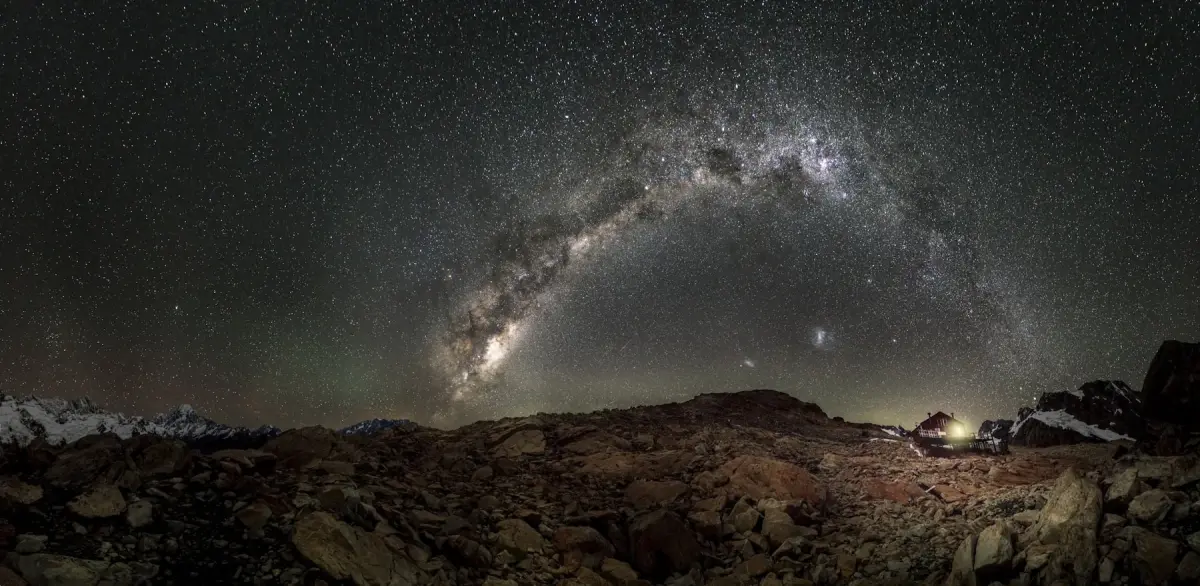
If you’re travelling between November and March, try to stay until after sunset. Lake Tekapo lies within an International Dark Sky Reserve, and on a clear night the stars are unlike almost anywhere else most people have ever seen.
Spend your first night in Tekapo. It gives you time to enjoy the sunset, experience the lake in changing light, and begin the journey without turning the first day into a long drive.
Day 2. Tekapo → Pukaki → Aoraki / Mount Cook
The Drive That Brings People to the South Island
Lake Pukaki is less than an hour from Tekapo, but this is where the road that defines the South Island truly begins.
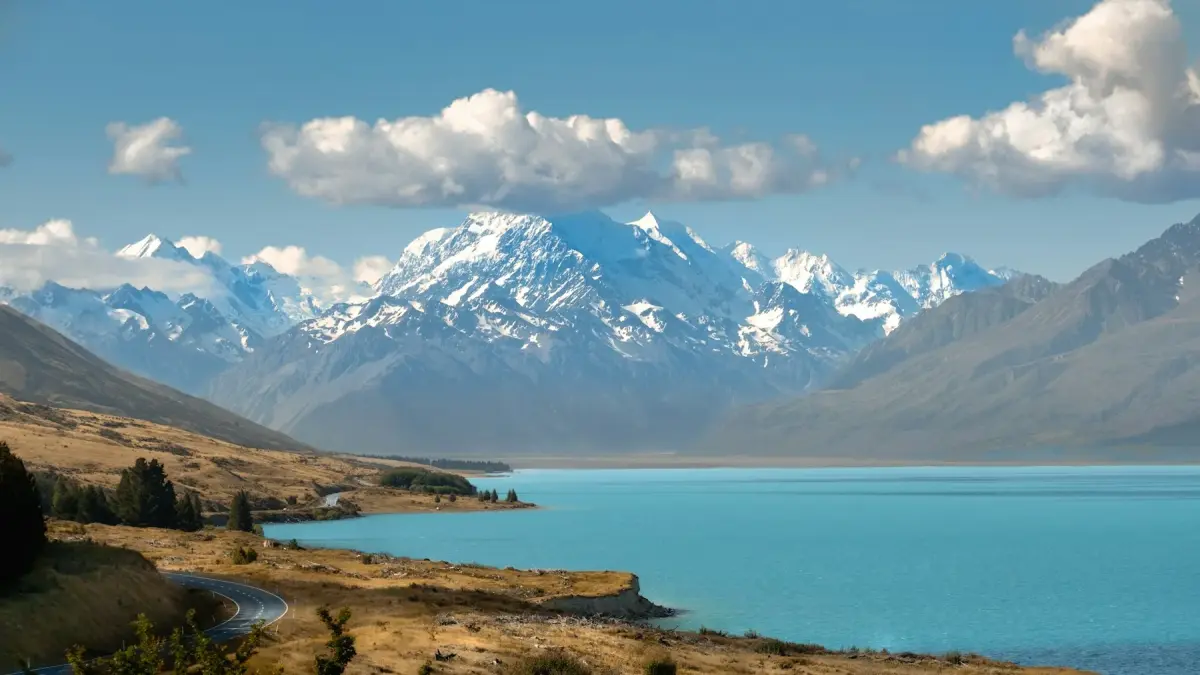
The water becomes an even deeper shade of turquoise, while Aoraki, New Zealand’s highest mountain, slowly appears ahead. On a clear day, the mountain grows larger with every kilometre along State Highway 80. It’s one of those rare places where the drive itself is every bit as memorable as the destination.
Don’t rush through this section. Nearly every official viewpoint is worth stopping at, and you’ll probably find yourself pulling over in places you never intended to. Depending on the light, the lake shifts from a soft milky blue to an intense turquoise, making the same view look completely different throughout the day.
Plan to spend at least a few hours in Aoraki / Mount Cook National Park. If time is limited, the short walks to Kea Point or Tasman Glacier View offer spectacular views of the glacier and surrounding valley without a demanding climb. If you’re looking for more of a challenge, the climb to Sealy Tarns is rewarding, though it involves a steep ascent and hundreds of steps.
Mountain weather changes quickly here. Even in summer, Aoraki may disappear behind clouds within minutes. That isn’t a reason to turn back. The glacial valleys, braided rivers, and surrounding peaks make the journey worthwhile whether the summit is visible or not.
The best option is to spend the night either near Mount Cook Village or in Twizel. That way, the following day feels relaxed rather than rushed.
Day 3. Mount Cook → Lindis Pass → Wānaka
When the Landscape Changes Once Again
After leaving Mount Cook, it feels as though you’ve already seen the South Island at its very best. But that’s not how this island works. It doesn’t rely on one spectacular place—it keeps changing, revealing a different side of itself with every hour on the road.
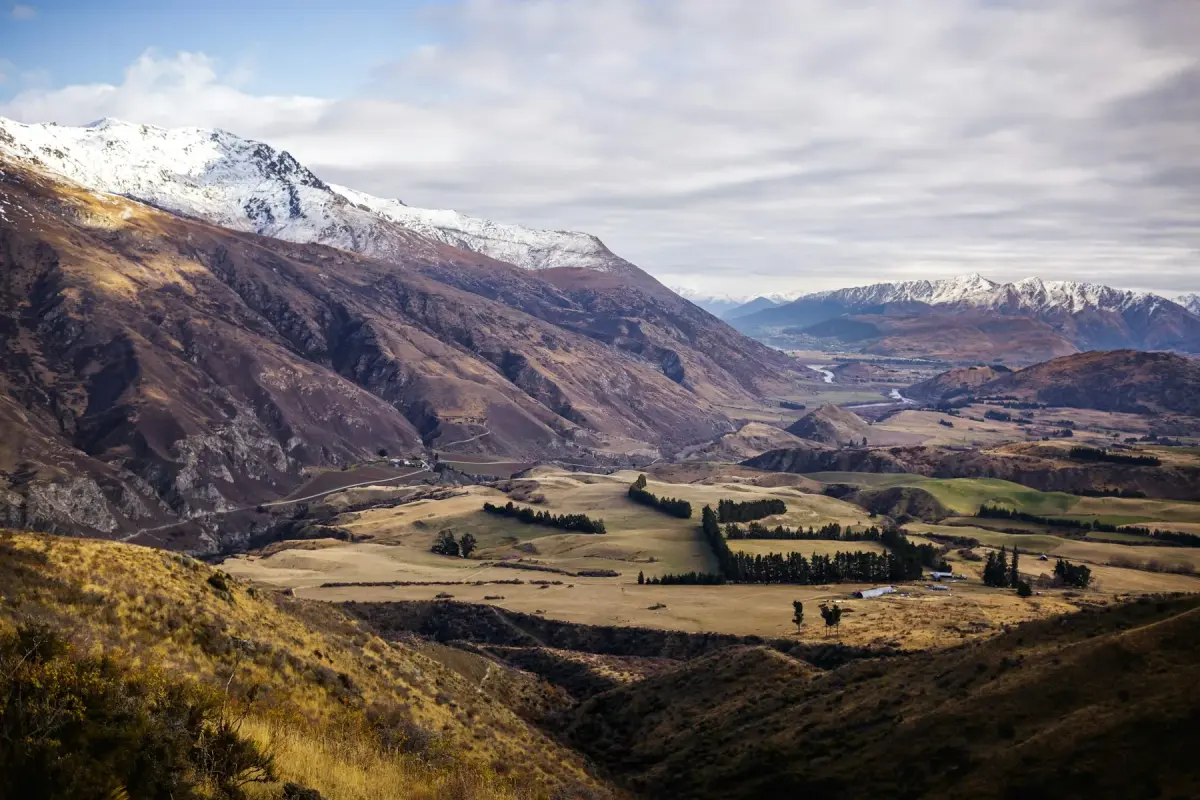
The turquoise lakes gradually disappear behind you, replaced by broad valleys, dry rolling hills, and the vast open landscapes of the Mackenzie Basin. This part of the journey feels quieter, yet it’s here that you truly begin to understand the scale of the South Island. In photographs, these landscapes can seem almost empty. In person, they’re anything but. They create a powerful sense of space and freedom that many travellers remember even more vividly than the famous landmarks.
Eventually, the road begins to climb towards Lindis Pass. This is a place worth stopping for, even if only for a few minutes. The golden hills look nothing like the classic image of New Zealand, which is exactly why they stay with you. The scenery is especially beautiful in the early morning or late afternoon, when the low sun brings every fold of the landscape into sharp relief.
By the afternoon, you’ll arrive in Wānaka. After several busy days on the road, the town feels like a chance to catch your breath. You stop reaching for your camera every few minutes and instead find yourself wanting to stroll along the lakeshore, enjoy dinner with a view of the water, and simply slow down.
Many visitors come here only to photograph the famous tree growing out of the lake. But stay for at least one night, and you’ll realise that the tree isn’t what makes Wānaka memorable. What stays with you is the feeling that, for the first time on the journey, there’s no need to hurry to the next destination.
Day 4. Wānaka
A Day Without Hurrying
If the previous days were about the road, Wānaka is your chance to slow down.
Most visitors begin the morning at the famous lone tree growing out of the lake. It’s worth arriving early, before the shoreline fills with people. But leaving town immediately afterwards means missing what makes Wānaka special.
The town isn’t defined by a single landmark. It’s the atmosphere that stays with you. In the morning, locals jog along the waterfront. During the day, cafés fill with people lingering over coffee. In the evening, much of the town drifts toward the lake to watch the sun disappear behind the mountains. After several days of constant driving, this is where the trip stops feeling like a checklist of sights.
If you’re looking for something active, hike Roys Peak. The climb takes several hours and requires a good level of fitness, but the view from the top is one of the South Island’s most iconic. If hiking isn’t your idea of a perfect day, that’s completely fine. Sometimes a walk along the lake, a good coffee, and nowhere particular to be are exactly what this journey needs.
A second night in Wānaka isn’t essential, but it changes the pace of the trip. Instead of always moving on, you finally have time to settle into one place.
Day 5. Wānaka → Queenstown
Two Roads, Both Worth Taking
There are two ways to drive from Wānaka to Queenstown.
The first crosses the Crown Range. It is New Zealand’s highest sealed road, offering dramatic alpine scenery, steeper climbs, and winding bends. In summer it’s usually an easy drive, but in winter it’s important to check road conditions before setting off.
The second route passes through Cromwell. It takes a little longer but is gentler and often a better choice if you’re less comfortable on mountain roads or travelling in poor weather.
By the afternoon you’ll arrive in Queenstown. It feels noticeably different from the places you’ve visited so far. There are more people, more restaurants, more shops, and a livelier atmosphere. Yet with Lake Wakatipu stretching along the waterfront and mountains rising on every side, it never feels disconnected from nature.
There’s no need to rush through everything on your first evening. A walk along the lake, perhaps a viewpoint if time allows, and a relaxed dinner are enough. The most memorable drive of the trip is still waiting.
Day 6. Queenstown → Glenorchy → Queenstown
When the Road Becomes the Destination
The drive from Queenstown to Glenorchy takes less than an hour. Many people think of it as a short excursion, but it often becomes one of the strongest memories of the entire South Island.
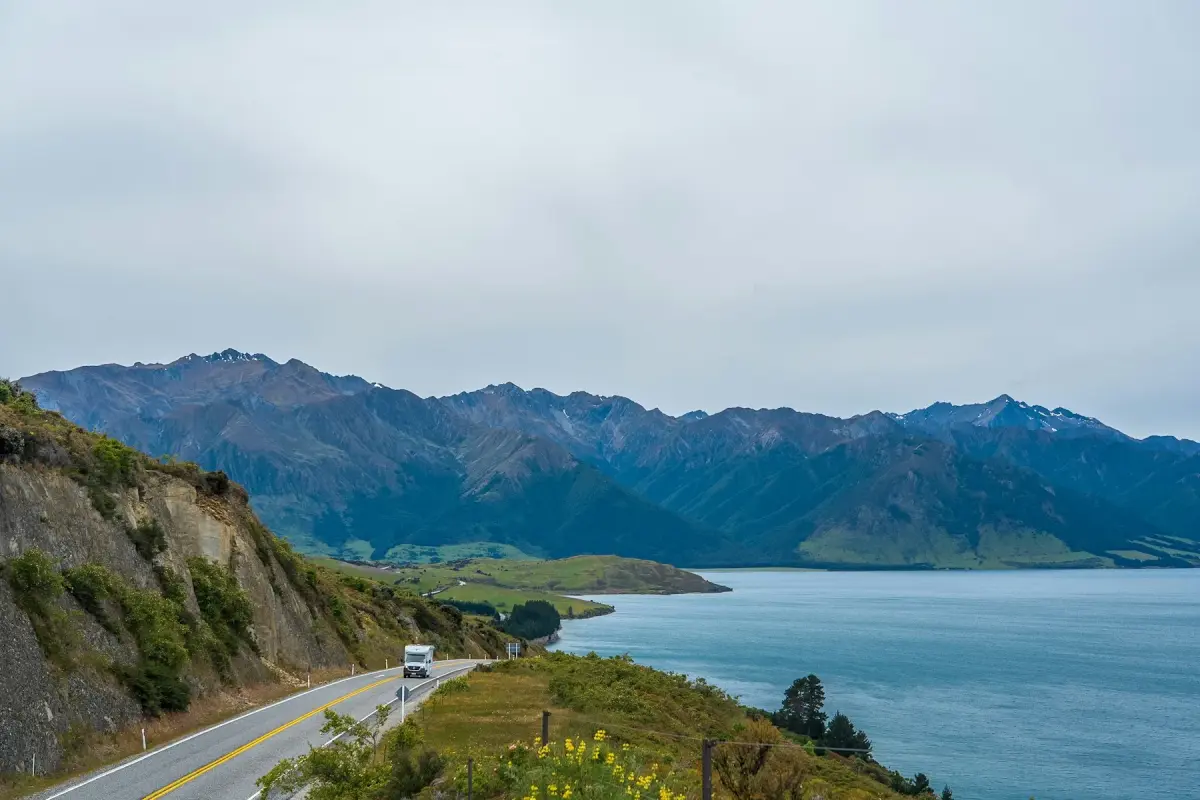
For most of the journey, the road follows the edge of Lake Wakatipu. Cliffs rise straight from the water, the mountains draw closer, and every bend reveals another panorama. Even after five days surrounded by spectacular landscapes, you’ll probably find yourself pulling over again and again.
Don’t focus on reaching Glenorchy as quickly as possible. The real experience lies in the drive itself. Stop at the viewpoints, walk down to the shoreline, and take your time. This is one of those rare roads where slowing down makes the journey far more rewarding.
Glenorchy itself is a small, quiet town. People come here not for the town, but for the landscape that surrounds it. After a leisurely walk, drive back to Queenstown along the same road. The return journey feels surprisingly different, with changing light and familiar scenery seen from a new perspective.
If You Have Two More Days
Milford Sound
This is where the main route comes to an end.
But if you have extra time, it’s well worth extending your trip to Milford Sound. It reveals an entirely different side of the South Island.
The wide open valleys disappear, replaced by lush rainforest. Instead of glacial lakes, towering cliffs rise above deep fjords carved by ice. After the dry landscapes of Central Otago, it almost feels like entering another country.
Rather than attempting Milford Sound as a very long day trip from Queenstown, spend the night in Te Anau and leave early the next morning. The drive becomes part of the experience instead of simply a long day behind the wheel.
Before You Go
The best time for this route is from November to April. Days are longer and winter road closures are less likely, but even in summer it’s worth checking both the weather forecast and road conditions before setting off.
Six days is the minimum needed for the route, but seven days allow you to enjoy a full day in Wānaka without feeling rushed.
While the roads are generally excellent, travelling by car gives you the freedom to stop at the countless viewpoints that make this journey so memorable.
Services around Aoraki / Mount Cook are limited, so fuel up and buy any essentials in advance. If you plan to hike, always check the latest track information, as mountain weather can change within hours.
A Journey You’ll Remember
At the beginning of the trip, you think you’re travelling to see a handful of famous views: a turquoise lake, the road leading toward Aoraki, or the mountains reflected in Lake Wakatipu.
A few days later, you realise those places are only part of what you’ll remember.
What stays with you is the feeling of being on the road itself. A road where every mountain pass reveals a new landscape, where you stop more often than you planned, and where the stretches between destinations turn out to be just as beautiful as the destinations themselves.
That is what makes this one of the South Island’s greatest road trips. It doesn’t show you New Zealand one landmark at a time. It lets you spend an entire week inside the landscape that first made you dream of coming here.