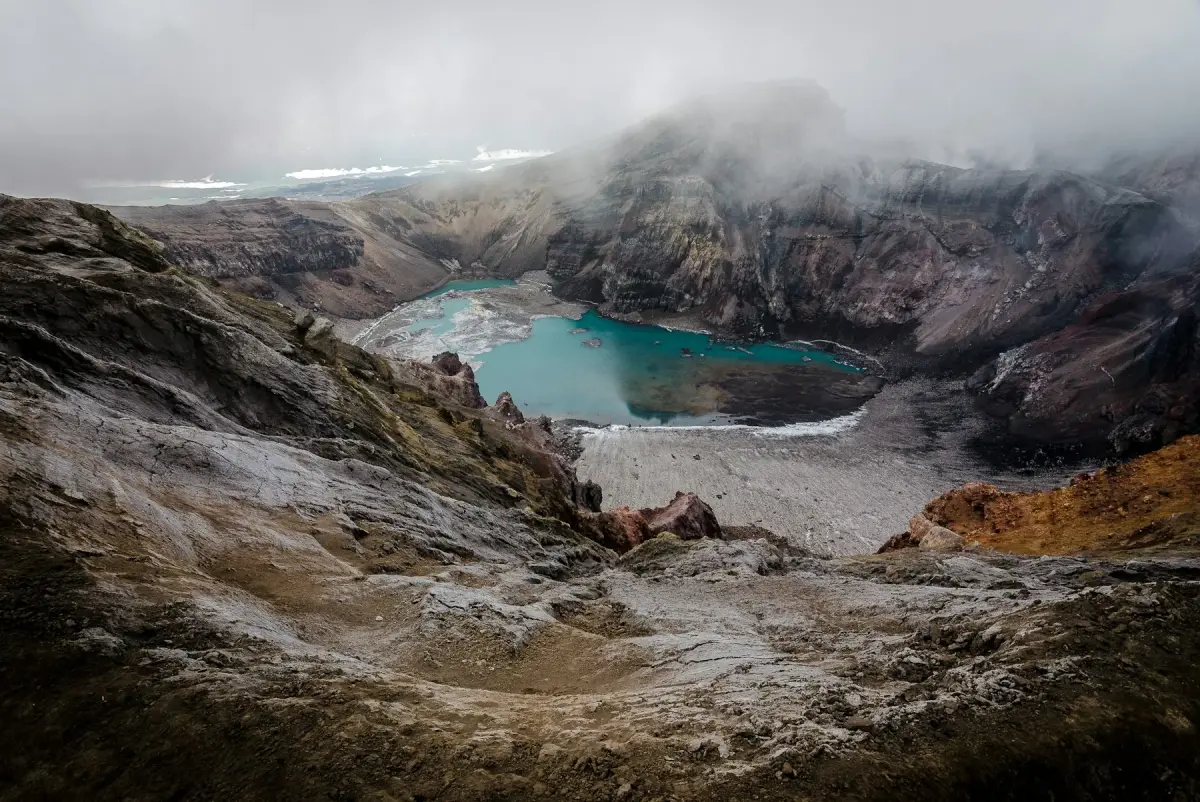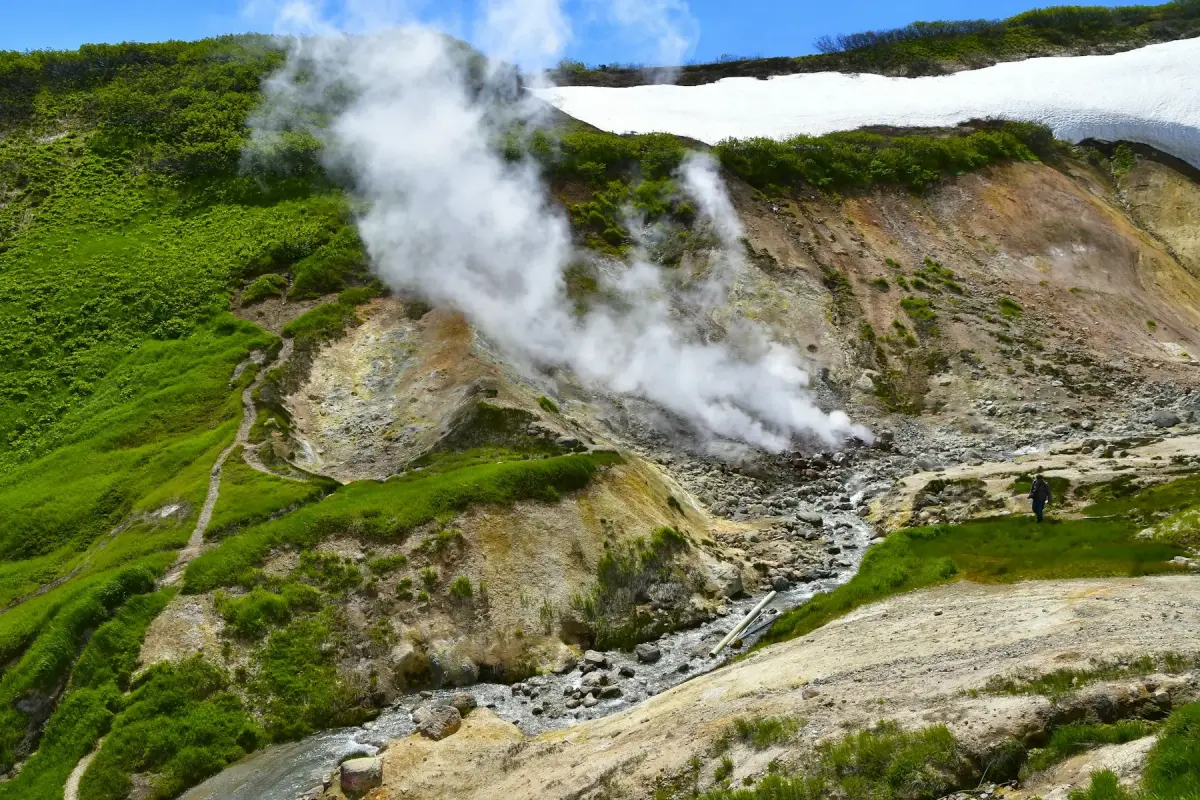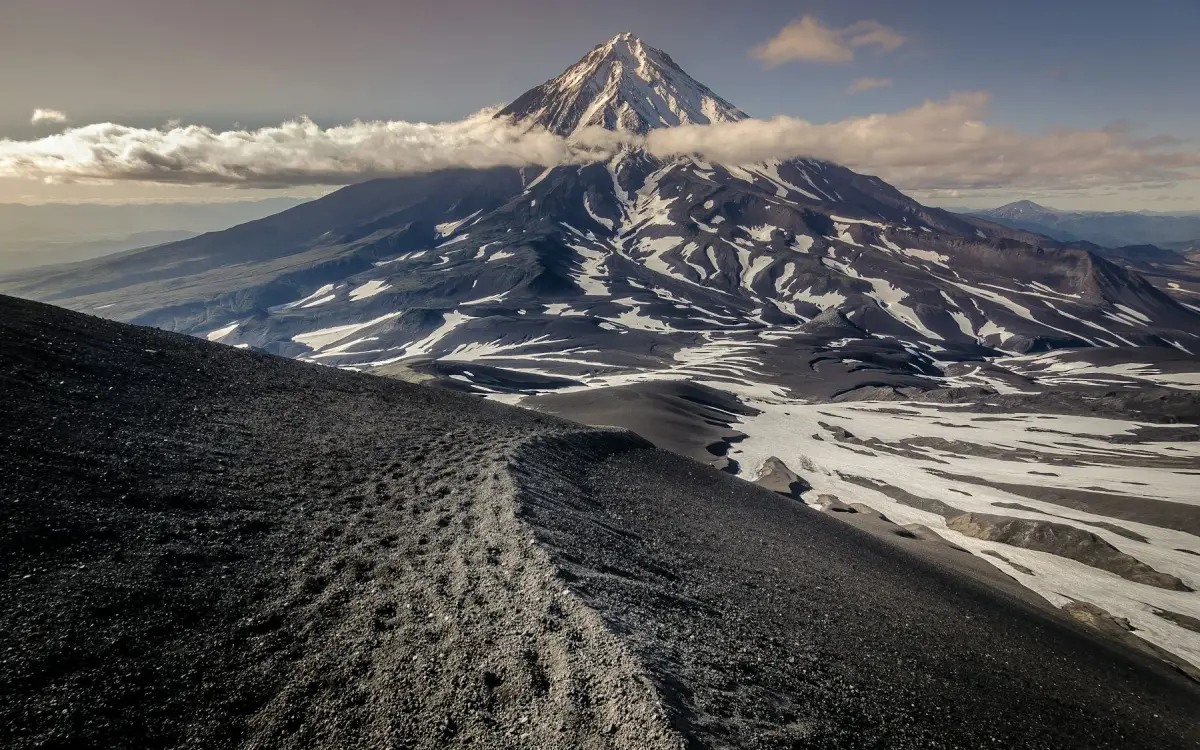
Conversations about Kamchatka usually begin with volcanoes, the Pacific Ocean, hot springs, or the Valley of Geysers.
Animals tend to appear a little later.
At first, they seem like individual details along a route.
Then it becomes noticeable that they are present in almost every landscape on the peninsula.
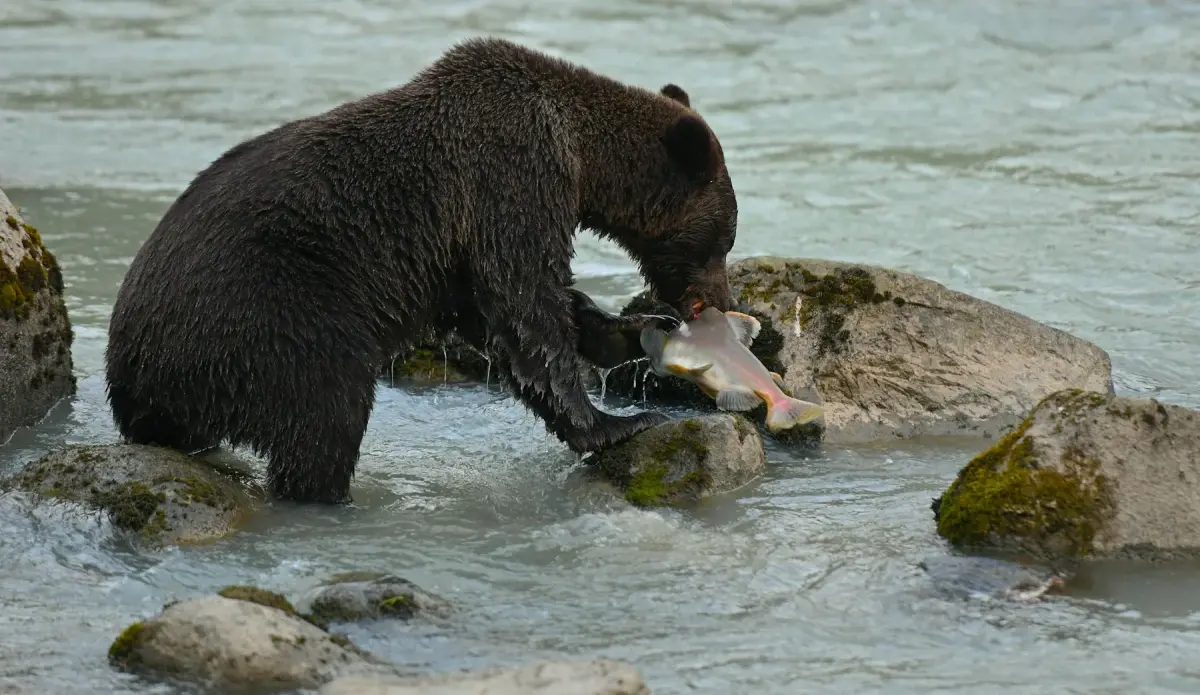
Salmon move upstream along the rivers toward their spawning grounds.
Bears appear along those riverbanks.
Steller sea lions occupy sections of the coast.
Seabirds gather on cliffs and offshore islands.
After a while, wildlife no longer feels like an addition to Kamchatka’s nature. It becomes part of the landscape itself.
Rivers That Carry Life
Many of Kamchatka’s rivers are connected to the annual salmon runs.
During summer and autumn, fish leave the ocean and move upstream.
At first glance, it looks like a simple natural process.
Yet a significant part of life on the peninsula is built around it.
Bears gather along the rivers.
Birds concentrate above the water.
Even small stretches of river begin to look different during this period of the year.
In many parts of Kamchatka, rivers become the places where animals are most often observed.
Bears Do Not Feel Unusual Here
In many regions, seeing a bear is considered a rare event.
In Kamchatka, the relationship with this animal is different.
Warning signs appear along hiking trails, near rivers, and beside certain roads.
Information about bear activity is routinely included in guidelines for visiting natural areas.
Because of this, the bear is not perceived as a symbol from a travel brochure. It is simply one of the regular inhabitants of the local ecosystem.
This becomes especially noticeable near spawning rivers and around Kuril Lake.
A Coastline Shared by More Than People
Kamchatka’s coastline is not used only by ports, settlements, and travel routes.
Some sections of the shore are occupied by colonies of Steller sea lions.
Seabirds gather on rocky outcrops.
Orcas and whales move through coastal waters.
During boat trips, attention often shifts between the shoreline and the sea.
Animals become as much a part of the journey as bays, cliffs, and islands.
Kuril Lake
Many descriptions of Kuril Lake focus on bears.
The structure of the place itself is equally interesting.
The lake is connected to one of the largest sockeye salmon spawning systems in the region.
The fish attract bears.
The bears become a visible part of the landscape.
Observing wildlife here is therefore less about searching for individual animals and more about understanding how the entire ecosystem functions.
Seabirds
Compared with bears and orcas, birds often receive less attention.
Yet many sections of Kamchatka’s coastline are difficult to imagine without them.
Some species spend their time on cliffs.
Others follow fishing vessels.
Many gather near areas rich in fish.
On certain islands, bird colonies become the most noticeable element of the landscape.
Animals as Part of the Route
In Kamchatka, animals rarely exist separately from their surroundings.
They are connected to rivers, the ocean, the seasons, and the shape of the land.
For this reason, a story about the peninsula’s wildlife gradually becomes a story about the peninsula itself.
About salmon rivers.
About the Pacific coast.
About volcanic valleys.
About places where natural processes remain a visible part of everyday life.
That is why animals in Kamchatka are remembered not on their own, but together with the landscapes in which they live.