When people talk about Kamchatka, the word “volcano” is often used as a general description of the entire peninsula.
Looking at a map, that seems reasonable.
Dozens of volcanoes are concentrated within a relatively small area, and many of them are known far beyond the region itself.
Yet while traveling across Kamchatka, it quickly becomes clear that its volcanic regions differ greatly from one another.
Some are associated with steam and geothermal activity.
Others are known for crater lakes.
Some are defined by vast lava fields.
As a result, exploring Kamchatka’s volcanoes gradually becomes a way of exploring different landscapes across the peninsula.
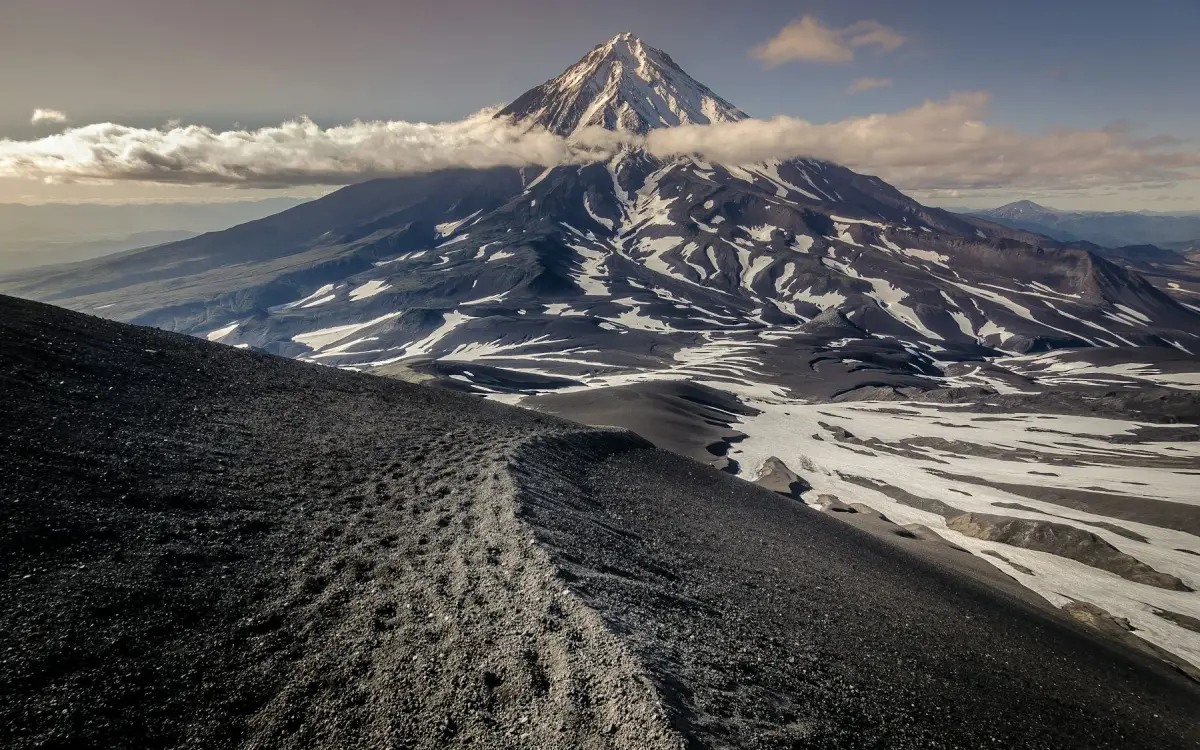
Avachinsky Volcano
For many journeys across Kamchatka, Avachinsky Volcano is the first volcano encountered along the route.
Its importance is not based solely on its reputation.
The volcano is located relatively close to Petropavlovsk-Kamchatsky and remains a prominent feature of southern Kamchatka’s landscape.
Even travelers who do not plan to climb it often encounter it during trips around the surrounding region.
Nearby lies Avachinsky Pass, one of the areas where it is easy to observe how quickly the terrain changes as the route moves away from the coast.
Many volcanic routes on the peninsula begin here.
Gorely
Gorely looks very different.
This volcano is best known for its craters.
Some of them contain lakes whose color can vary depending on water composition, weather conditions, and available light.
An interesting detail is that Gorely is not a single peak but a complex volcanic system formed through several stages of volcanic activity.
Its landscape contains numerous craters, depressions, and lava-covered areas.
On a map, it appears to be one volcano.
On the ground, it feels more like an entire volcanic district with its own geography.
Mutnovsky
In the Mutnovsky area, attention is drawn not so much to the volcano itself as to the processes taking place around it.
Fumaroles, steam vents, hot streams, and areas of active geothermal activity are found throughout the region.
In some places, several different geothermal features can be observed within a relatively small area.
For this reason, a route through the Mutnovsky region often feels less like a trip to a volcano and more like an exploration of a landscape where geological processes remain visible on the surface.
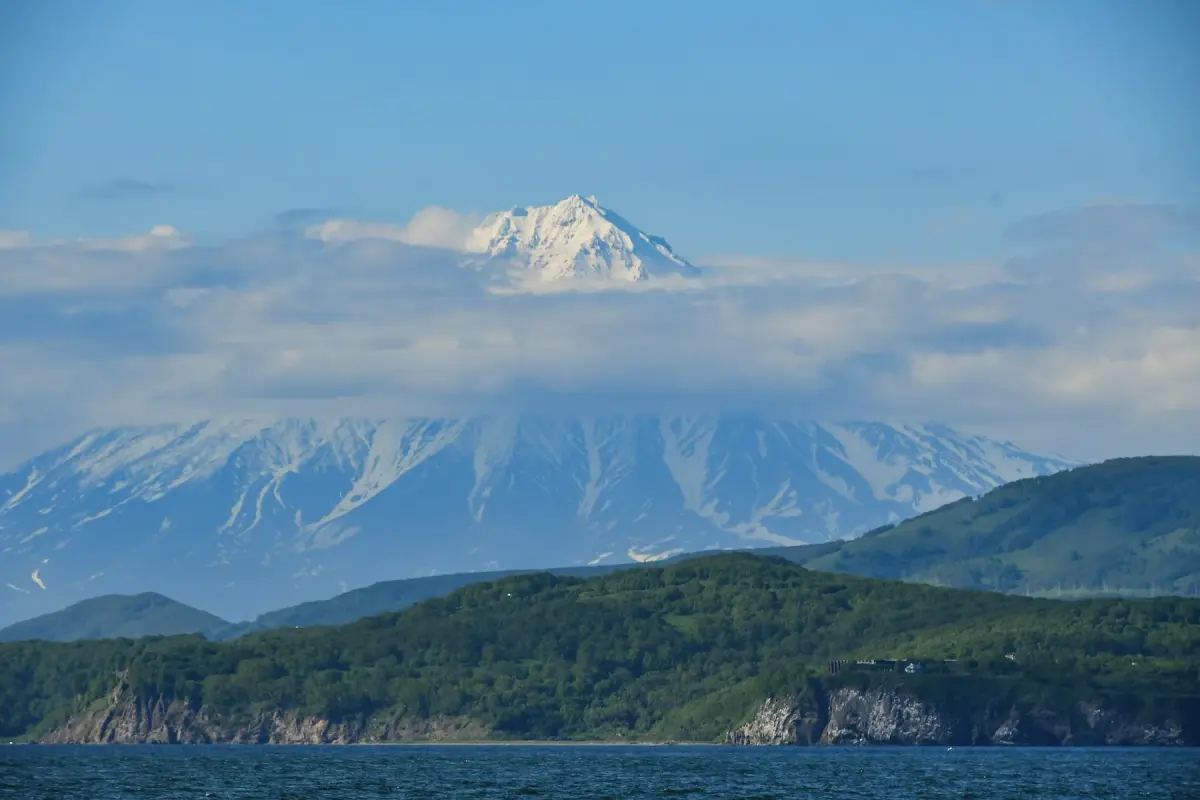
Vilyuchinsky Volcano
Not every volcano becomes a destination in its own right.
Vilyuchinsky Volcano often appears in a different role.
It serves as a landmark along the road, remains visible during long drives, and accompanies many journeys through southern Kamchatka.
Its distinctive shape makes it easy to recognize among the surrounding mountains.
Over time, it begins to feel less like an individual destination and more like a constant part of the wider landscape.
For many routes across southern Kamchatka, Vilyuchinsky remains a familiar presence throughout the journey.
Tolbachik
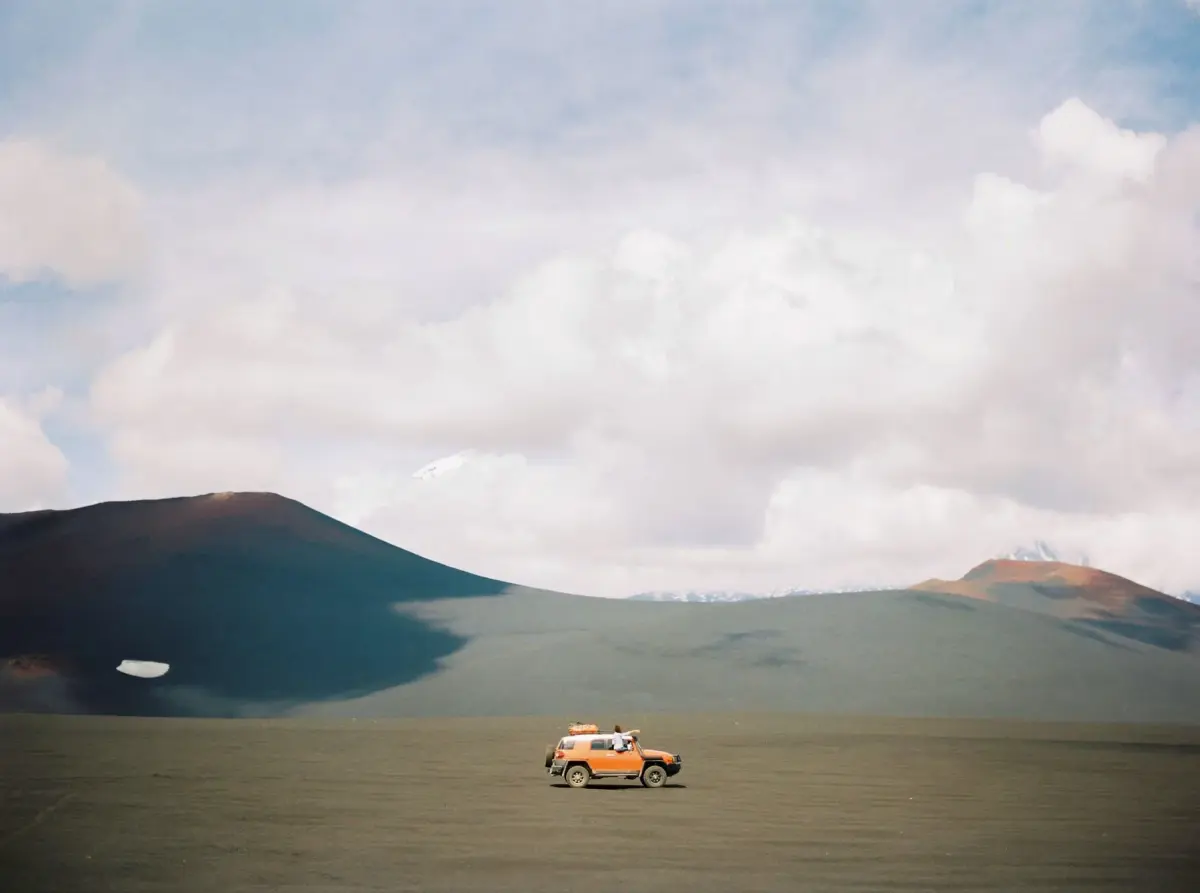
The Tolbachik region differs noticeably from many other volcanic areas of the peninsula.
Here, attention is drawn to extensive lava fields and relatively young landscapes.
Following major eruptions, parts of the region changed so dramatically that some areas still contain very little vegetation.
In certain locations, the visible traces of volcanic activity are only decades old rather than thousands of years old.
In geological terms, that is a remarkably short period of time.
Tolbachik therefore provides an opportunity to observe volcanic processes on a timescale that feels more tangible from a human perspective.
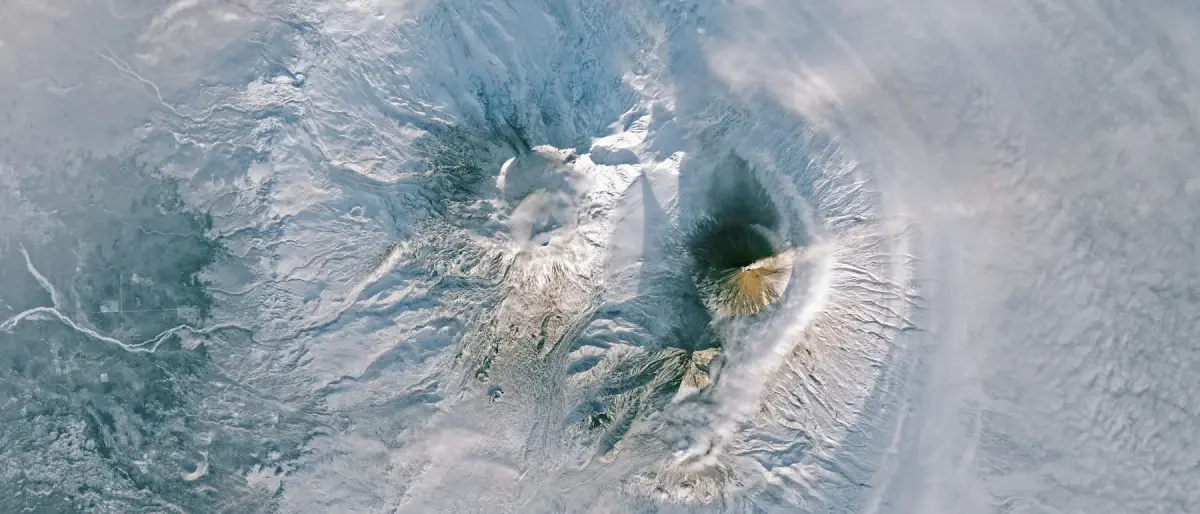
The Klyuchevskaya Volcano Group
In the northern part of central Kamchatka lies the Klyuchevskaya volcanic group.
It includes several major volcanoes, among them Klyuchevskaya Sopka, Bezymianny, and Kamen.
This region is notable not only for the size of its volcanoes but also for the concentration of volcanic features within a relatively compact area.
Here, a volcano is no longer perceived as a single mountain.
Instead, it becomes part of a broader volcanic region where different landforms are closely connected.
This is one of the places where the diversity of Kamchatka’s volcanic landscapes becomes especially apparent.
Volcanoes That Resist a Single Definition
After visiting several volcanic regions across the peninsula, it becomes clear that the word “volcano” covers a wide range of landscapes.
Some areas are associated with crater lakes.
Others are defined by steam fields.
Others are known for lava flows and volcanic plateaus.
In some places, the summit itself becomes the focus of attention.
Elsewhere, the surrounding geological activity plays the leading role.
For this reason, Kamchatka’s volcanoes rarely fit into a single image.
Each one reveals a different side of the peninsula and contributes its own perspective to the broader picture of the region.