There are places in Kamchatka where it is difficult to guess the temperature of the ground from the surrounding landscape. Snow may lie nearby, cold water may flow down the slopes, and the wind may arrive from the ocean. Yet only a few meters away, steam rises from the ground or a stream flows with water that remains warm throughout the year.
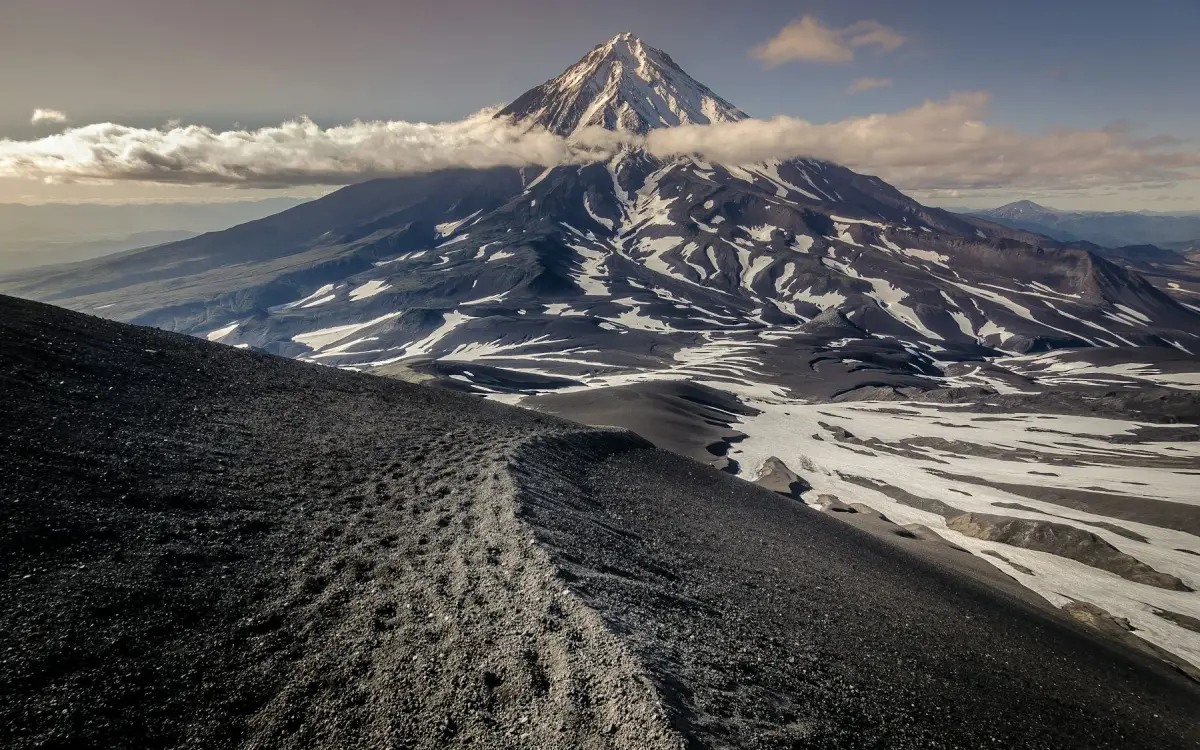
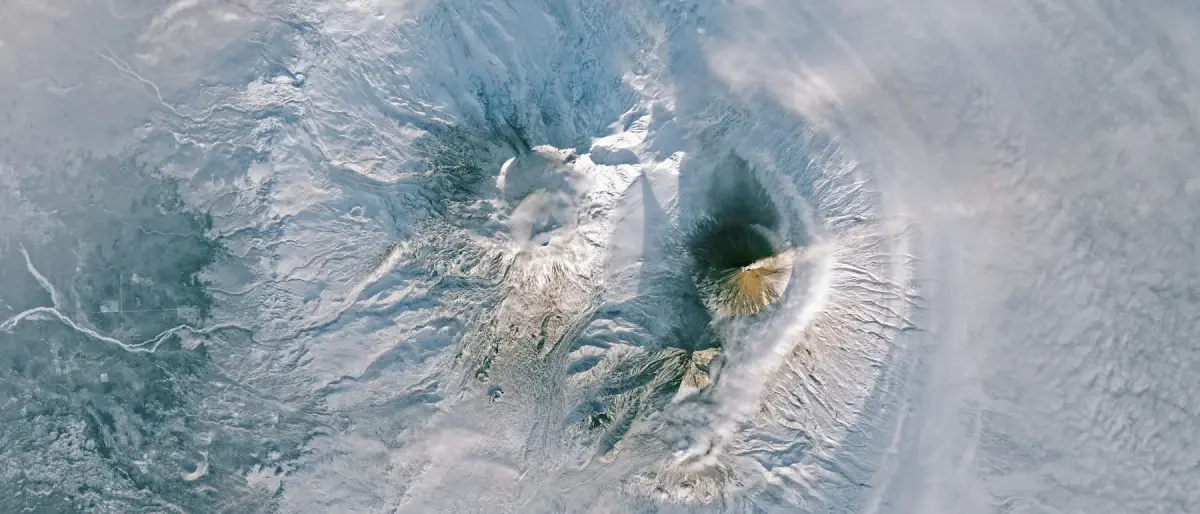
The peninsula is home to many volcanoes, so these phenomena are usually associated with them. During a journey across Kamchatka, however, it is often not the volcanoes themselves that attract attention, but the traces of processes continuing beneath the surface. They can be found in different parts of the peninsula and make its landscapes remarkably uneven.
Steam as Part of the Landscape
In everyday life, steam is usually associated with boiling water, a heating plant, or a hot spring. In Kamchatka, it can emerge directly from a mountainside.
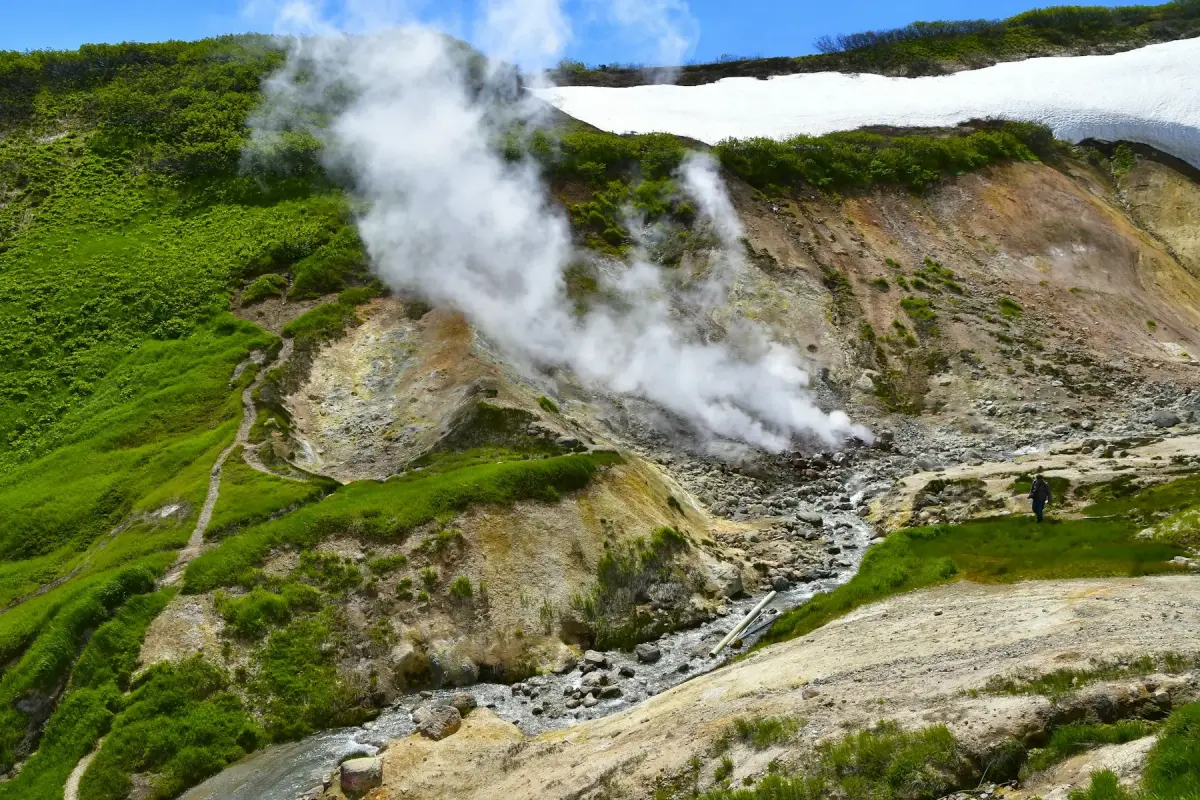
Fumaroles appear where hot volcanic gases reach the surface through cracks in the ground. Sometimes they form individual jets, while in other places entire slopes become covered with steam.
Interestingly, temperatures inside some fumarole fields can reach several hundred degrees Celsius, even though snow may lie only a few meters away or glacial water may be flowing nearby. These areas therefore feel less like isolated attractions and more like places where different temperature zones exist side by side.
Hot Water Does Not Come from the Weather
Most of Kamchatka’s rivers and streams are fed by snowmelt, glaciers, and rainfall.
Thermal springs work differently. Water travels deep underground, heats up, and then returns to the surface. In some areas, spring temperatures are so high that the water must be cooled before it can be used.
At the same time, a hot spring may be located in the middle of a forest, a valley, or an open mountain landscape where the air remains cool for most of the year. The temperature of the water is therefore determined not by the season, but by processes taking place underground.
Ground That Continues to Produce Heat
Kamchatka is home to geothermal power stations. For many visitors, this comes as an unexpected detail.
Volcanoes are often viewed simply as natural landmarks. Here, part of the underground heat is used to generate electricity. The same energy that creates steam fields and pushes hot water toward the surface can also help supply nearby communities with power.
As a result, geothermal energy becomes not only a feature of the landscape, but also a part of everyday life on the peninsula.
Why Snow and Hot Water Can Exist Side by Side
This combination appears so frequently in Kamchatka that it gradually stops feeling unusual.
The reason is that climate and underground heat operate independently of one another.
Snow depends on air temperature and precipitation. Thermal springs depend on processes occurring deep below the surface. Because of this, a single area can simultaneously be influenced by both the oceanic climate and geothermal activity.
The result is a landscape where cold and heat exist next to each other without any obvious boundary between them.
Places That Continue to Change
Thermal areas cannot be considered completely permanent.
The temperature of individual vents may change over time. Some springs become more active, while others gradually weaken.
Following volcanic events, new outlets of gas or hot water may appear. For this reason, the map of geothermal activity remains a living system rather than a collection of fixed locations.
Heat as Part of the Peninsula’s Structure
Conversations about Kamchatka often focus on volcanoes. Yet a volcano is only one expression of the processes taking place underground.
Far more often, travelers encounter their effects: hot springs, steam fields, warm streams, and patches of ground where snow melts earlier than in the surrounding area.
Because of this, underground heat in Kamchatka is not perceived as a separate attraction. It is one of the characteristics that appears repeatedly across different parts of the peninsula. It takes different forms, but almost always serves as a reminder that many natural processes here are still active today.