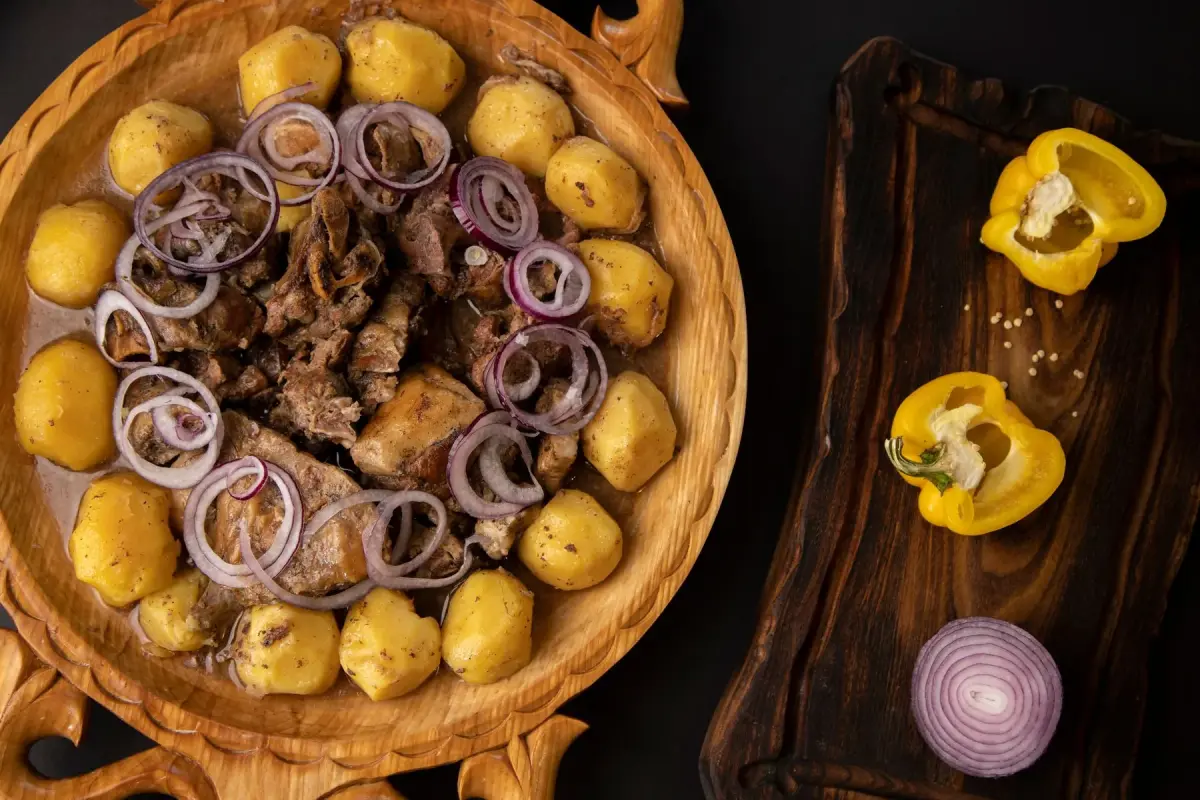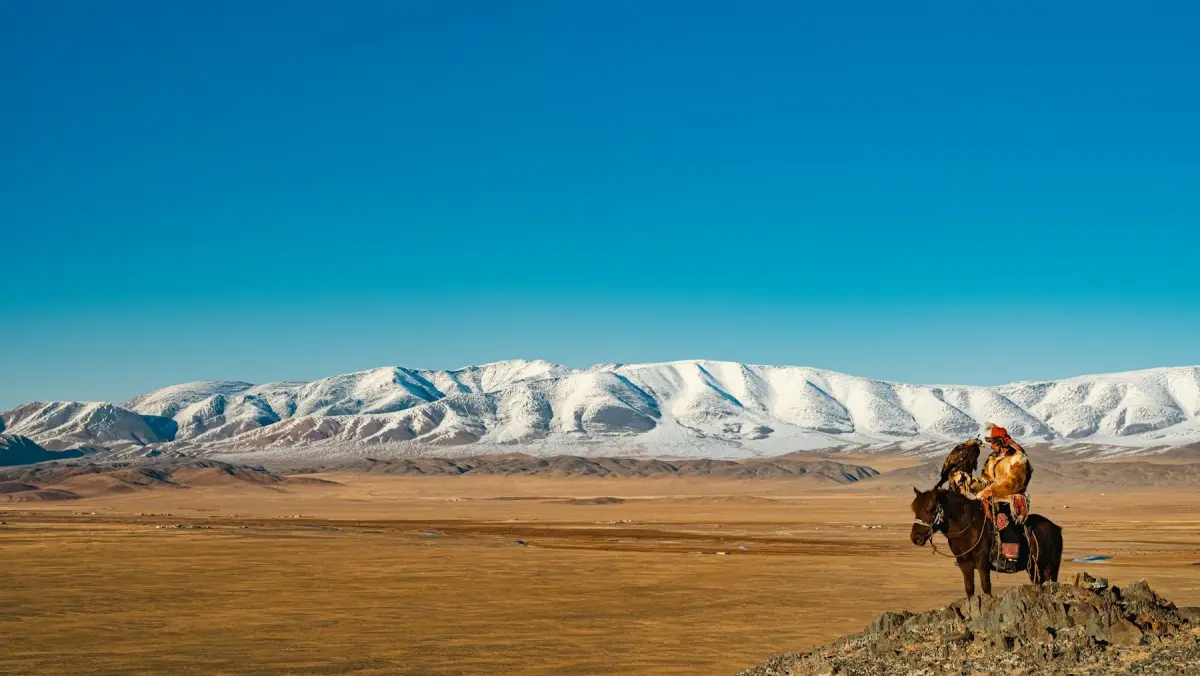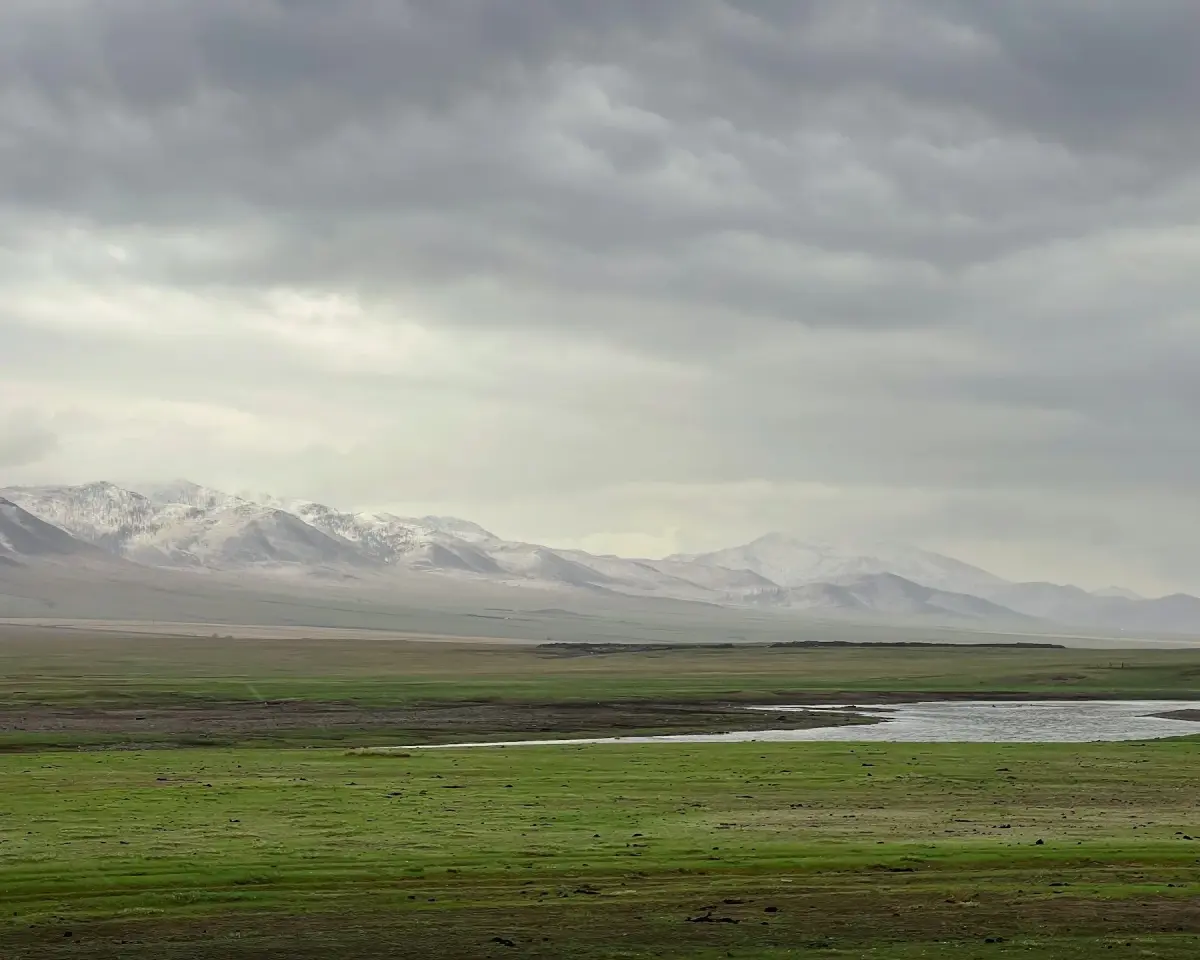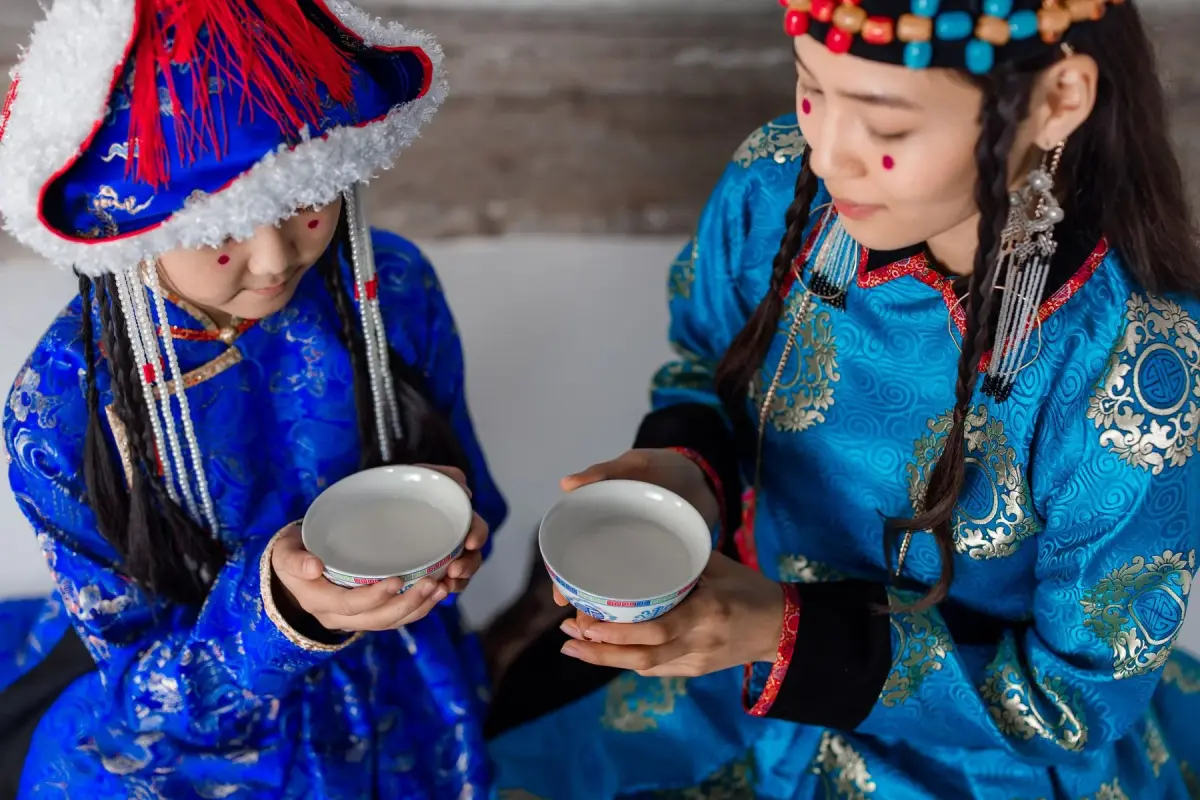
Before traveling to Mongolia, most people have a rough idea of what they expect to find on the table.
Meat, dough, and dairy products.
For many, that is where their knowledge of Mongolian cuisine ends.
Yet within the first few days of a journey, details begin to emerge that rarely appear in guidebooks. Surprisingly, it is not exotic ingredients or unusual cooking techniques that stand out.
Quite the opposite.
The things that leave the strongest impression are often the ones local people consider completely ordinary.
Salty Tea Is Not as Strange as It Sounds
For many travelers, their first encounter with Mongolian milk tea comes as a surprise.
Tea, milk, and salt.
On paper, the combination sounds unusual.
As a result, the first reaction is often cautious.
What is interesting, however, is how quickly that reaction changes. After several days on the road, cool winds, and long drives across the countryside, the drink begins to make much more sense. It is warming, pairs well with local food, and feels very different from that first sip.
Many travelers admit that the tea turns out to be far more enjoyable than they expected.
Dairy Products Appear Far More Often Than Expected
Before arriving in Mongolia, most people prepare themselves for a cuisine centered around meat.
And meat certainly plays an important role.
What often surprises visitors, however, is the sheer number of dairy products.
They appear at breakfast, during tea breaks, as snacks, and during visits to family homes and yurts.
Gradually it becomes clear that milk occupies a place just as important as meat.
For many travelers, exploring Mongolian cuisine becomes an introduction to an entire world of dairy products, many of which are rarely encountered outside the country.
Aaruul Looks More Like a Souvenir Than Food
Among all Mongolian foods, aaruul is perhaps the one that raises the most questions.
These small, pale pieces, which often resemble stones or decorative objects, can be found in markets, shops, and homes throughout the country.
Many travelers do not immediately realize that they are edible.
The first encounter is usually accompanied by surprise. Aaruul is much harder than most people expect.
Yet after a while, it becomes clear why it is such a popular travel snack. It keeps for a long time, requires no special storage conditions, and easily fits into a pocket or backpack.
For many visitors, aaruul becomes one of Mongolia’s most unexpected culinary discoveries.
The Food Seems Simple Until You Spend a Few Days in Mongolia
On the first day, Mongolian cuisine may appear very straightforward.
A small number of ingredients, few spices, and familiar combinations.
But after several days, that simplicity begins to look different.
After a long drive, a hot meal suddenly feels invaluable. After walking across the steppe, a filling lunch becomes especially satisfying. After hours spent in the wind, a cup of hot tea feels exactly right.
Gradually, it becomes clear that many dishes fit naturally into the rhythm of traveling through the country.
That is why they often leave a very different impression than they do at first.
There Are Far Fewer Spices Than Many Travelers Expect
For people familiar with the cuisines of Thailand, India, China, or Vietnam, Mongolia often comes as a surprise.
Here, strong flavors are rarely created through large amounts of spices.
Instead, the focus remains on the ingredients themselves.
Meat, dough, and dairy products.
At first, this approach may seem unusual. Over time, however, it allows travelers to appreciate the character of the cuisine in a different way.
Mongolia turns out to be very different from the image of Asian food that many visitors bring with them before the trip.
Hot Food Feels Especially Important Here
After a few days in Mongolia, many travelers begin to notice something else.
Almost everything tastes particularly satisfying when served hot.
Hot tea, hot soup, and hot meat dishes.
After a chilly morning, a long drive, or a windy afternoon, that warmth provides a sense of comfort that is difficult to overstate.
As a result, many visitors quickly realize how important temperature is to the experience of the meal—not just flavor.
Portions Are Larger Than Expected
Another surprise often arrives within the first few days.
Portions are frequently generous.
This is especially noticeable in smaller cafés outside major cities.
After a few meals, many travelers become more cautious when ordering. What appears to be an ordinary dish can easily turn out to be a full meal.
Especially when accompanied by tea or additional local snacks.
Some Dishes Only Make Sense After a Few Days
Interestingly, first impressions of Mongolian cuisine are often very different from impressions formed after a week of travel.
Things that initially seem too simple or unfamiliar gradually become part of everyday life on the road.
At some point, you stop comparing local food to what you are used to at home.
Instead, you begin to see it within the context of Mongolia itself—its roads, its climate, and its rhythm of life.
That is often when many dishes begin to reveal their true character.
Why These Impressions Stay in Memory
After returning home, people rarely remember only the names of dishes.
More often, they remember moments.
The first cup of salty milk tea, an unexpected encounter with aaruul, a hot lunch after hours on the road, or a conversation around the table in a yurt.
Mongolia tends to surprise people not through exoticism, but through details.
And perhaps that is why many travelers return home carrying not only photographs of steppes and mountains, but also memories of a cuisine that proved far more interesting and unexpected than they had imagined before the journey.