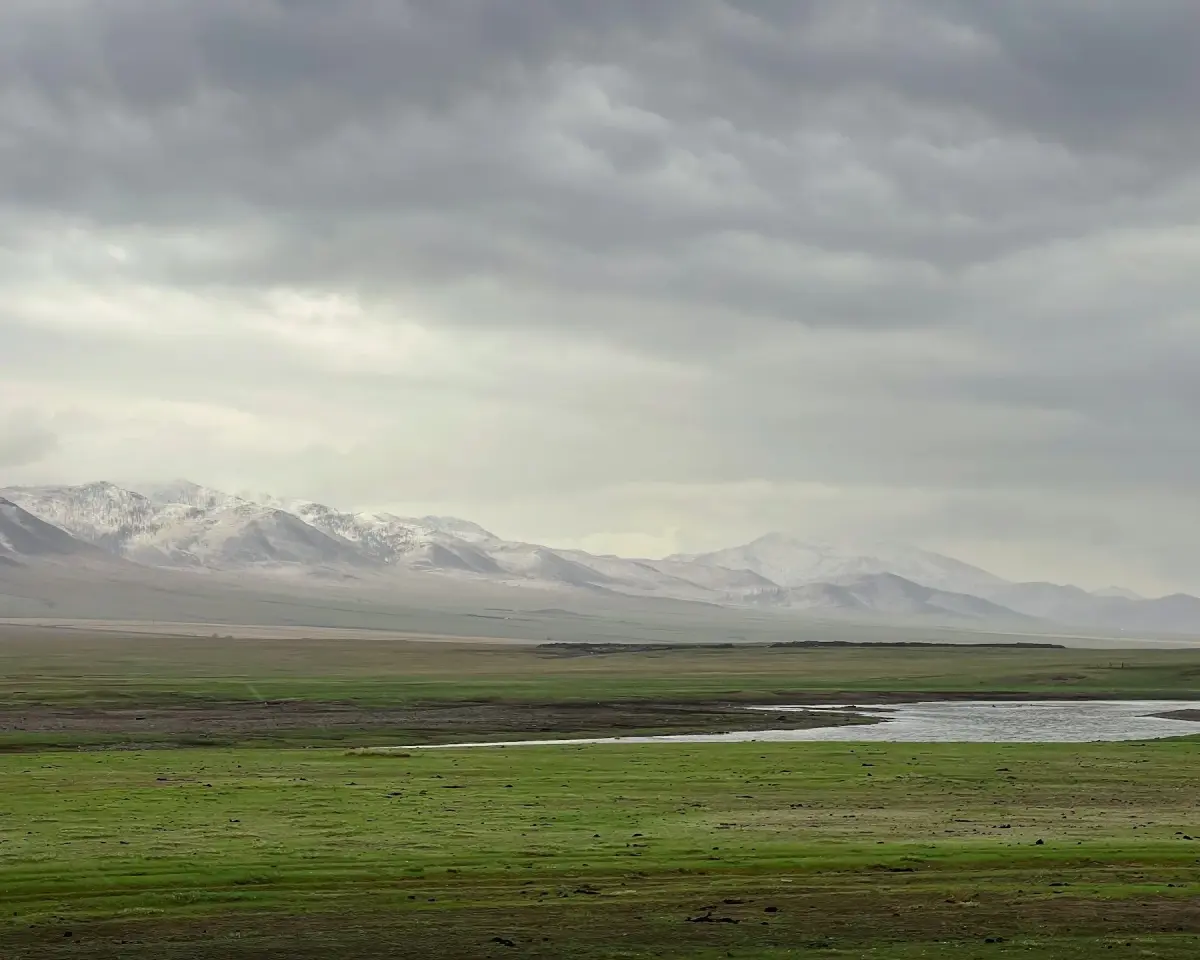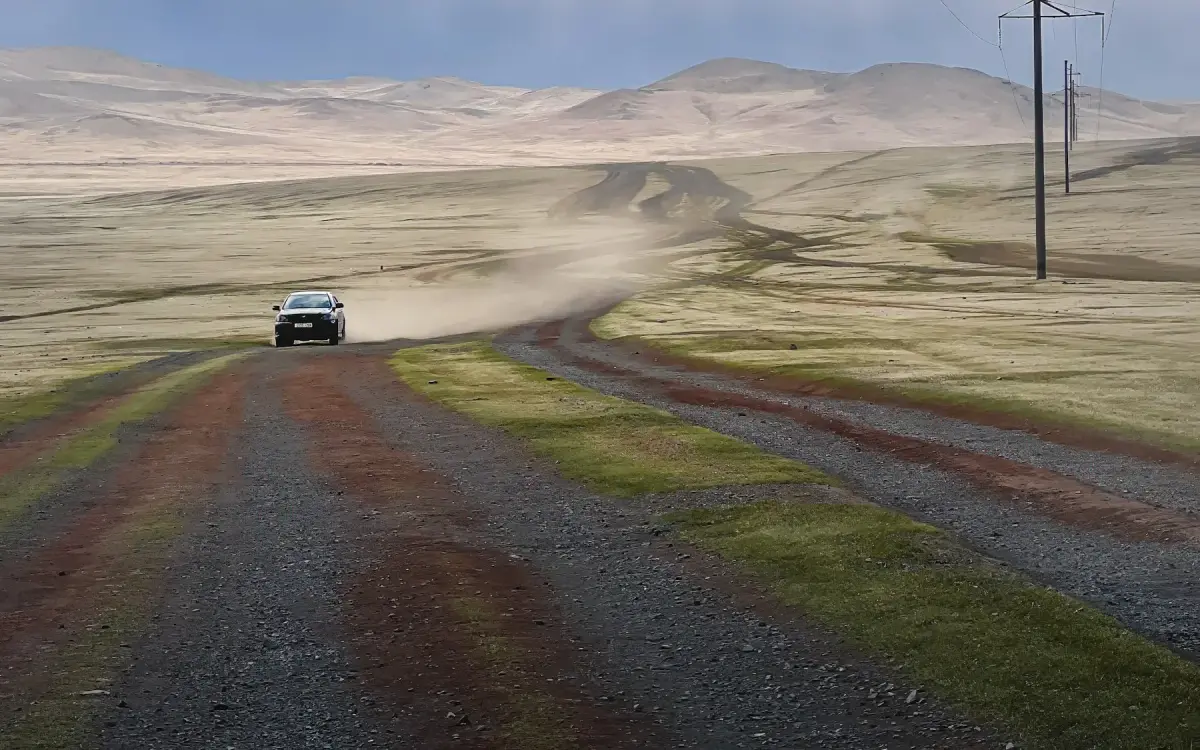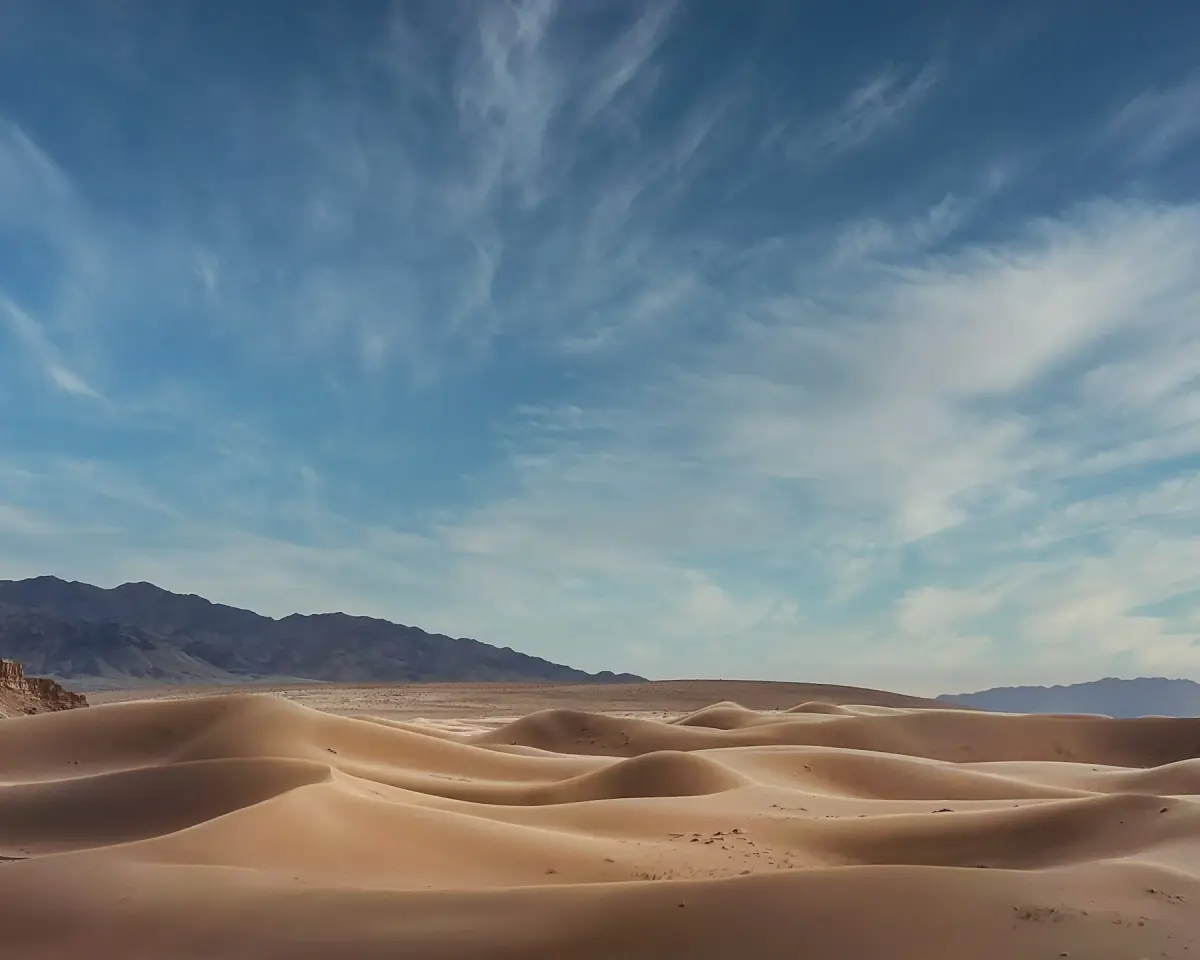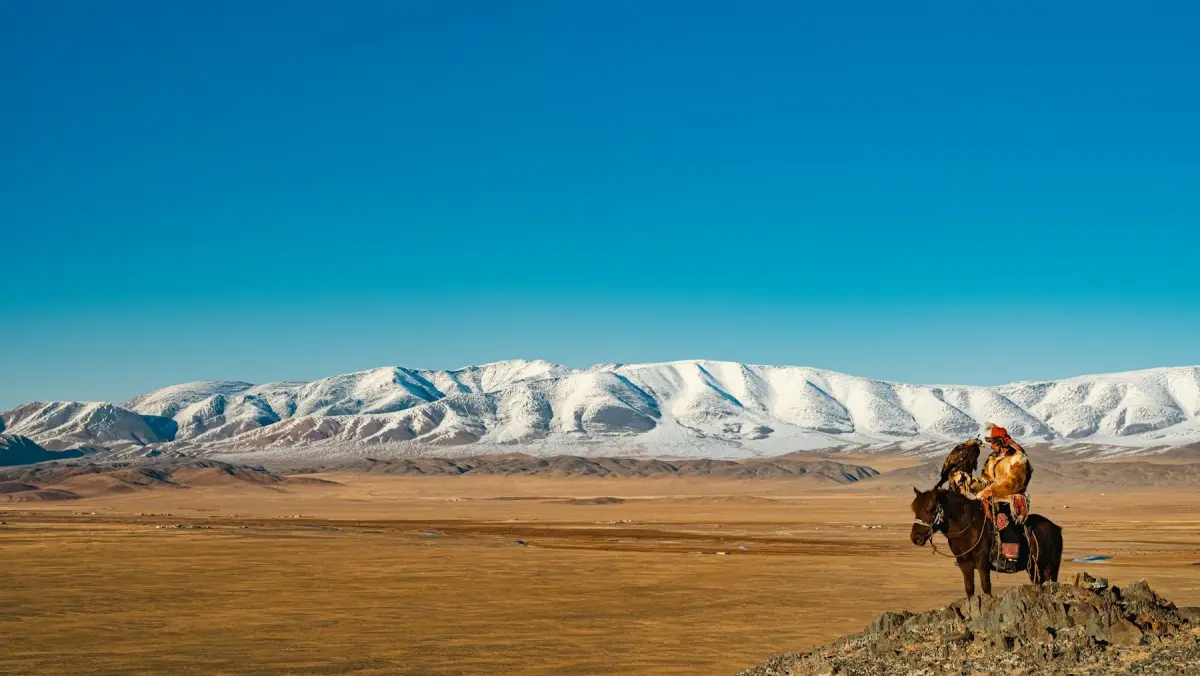
On a map, Mongolia looks enormous.
So enormous that it is easy to overlook the details. A few major cities, long roads, and vast open spaces stretching between them.
Yet as you travel through the country, it gradually becomes clear that Mongolia is not a single endless landscape, as it sometimes appears from afar.
It is constantly changing.
Most of the time, those changes happen almost imperceptibly. A few hours ago you were surrounded by green valleys and rivers. Then volcanic fields begin to appear. A few days later, the road leads to a vast lake. Soon after, a sandy horizon emerges and stretches all the way to the edge of the sky.
Perhaps one of the most rewarding ways to experience Mongolia is not by counting landmarks, but by watching how the horizons change.
The Horizon of Nomadic Mongolia
For many travelers, this is where the real introduction to Mongolia begins.
The Orkhon Valley is not defined by a single famous attraction. It is difficult to capture in a single photograph.
What matters here is the feeling of space and the life that exists within it.
Herds of horses move across the green hillsides. White yurts appear in the distance. The Orkhon River flows quietly through the valley, barely changing its course.
This is one of the best places to understand why the nomadic way of life survived in Mongolia for so long. The landscape is so open that the idea of constant movement feels like a natural part of the environment itself.
A few days in the Orkhon Valley often change a traveler’s perception of Mongolia more than many famous sights.
The Horizon of Water
After days spent among the steppes, water comes as a surprise.
Not a small lake surrounded by hills, but a vast expanse that becomes a horizon in its own right.
In northern Mongolia lies Lake Khuvsgul, one of the largest and deepest lakes in Asia.
Here, it is not only the scenery that changes.
The light changes.
The color of the air changes.
Even the feeling of space changes.
In the morning, the far shore may almost disappear into the mist. By midday, the water turns a brilliant blue. In the evening, the mountains reflect on the surface and the boundary between sky and water becomes almost invisible.
After several days in the steppe, this part of Mongolia feels like a completely different country.
The Horizon of Volcanoes
Then come landscapes that few travelers expect to find in Central Asia.
The area around Khorgo Volcano looks as though it has been transported here from Iceland.
Black lava fields, basalt plateaus, an ancient volcanic crater, and stone formations stretching for miles across the landscape.
The contrast is especially striking. Green pastures filled with yaks and horses can lie just a few kilometers away from solidified lava flows that seem to belong to another world.
Mongolia is rarely associated with volcanoes. That is exactly why this horizon becomes one of the journey’s greatest surprises.
The Horizon of Sand
The Gobi Desert often becomes the biggest surprise of all.
Not because there is so much sand.
But because the Gobi is nothing like the image of a desert that many people carry with them before arriving.
The Khongoryn Els dunes rise hundreds of meters above the surrounding landscape. Green valleys appear between sandy ridges. Red cliffs give way to rocky plateaus. Dry stretches of land suddenly reveal narrow canyons.
The Gobi is constantly changing.
That is why travelers often remember not a particular location, but the experience of moving through the desert itself.
Each day reveals a new horizon.
The Horizon of the Road
There is another horizon that cannot be tied to a single region.
It is the road itself.
In Mongolia, the spaces between destinations often contain as many memorable moments as the destinations themselves.
A solitary yurt.
An unnamed lake.
A herd of horses on the horizon.
A mountain pass absent from any guidebook.
A sunset that makes you stop the car in the middle of nowhere.
Gradually, you begin to realize that Mongolia is one of the few countries where the road becomes an experience of its own.
Sometimes even more important than the place it leads to.
Why Mongolia Cannot Be Seen in a Single Trip
Many countries can be described through a handful of images.
Mongolia is much harder to reduce to a few impressions.
Its nomadic valleys, lakes, volcanoes, deserts, and endless roads reveal such different sides of the country that they eventually feel like several separate worlds.
That is why Mongolia is rarely remembered through a single attraction.
More often, it stays in memory as a journey through constantly changing landscapes, where every turn in the road reveals yet another horizon.
Suggested Route
We arrive in Ulaanbaatar and take our time before heading into the countryside. After the flight, we settle into our hotel, explore the city center, try local food, and gradually adjust to the rhythm of Mongolia.
The following day, we leave the capital behind. The city slowly disappears in the rearview mirror, while the first open landscapes begin to appear ahead.
The next several days are spent in the Orkhon Valley.
We walk along the Orkhon River, watch herds of horses, and observe the daily life of nomadic families. We visit Ulaan Tsutgalan Waterfall, stop at panoramic viewpoints, and spend plenty of time simply enjoying the roads, which are often just as beautiful as the attractions themselves.
This is one of the best places in Mongolia to understand the scale of the country and the logic of nomadic life.
We continue toward Khorgo Volcano and Lake Terkhiin Tsagaan.
We hike to the crater rim, explore lava fields and volcanic caves, and spend several days along the lakeshore watching the changing light at sunrise and sunset.
Even travelers who have seen countless photographs of Mongolia are often surprised by this landscape.
After the volcanic landscapes, we travel north.
The steppes gradually give way to forests, and the vast waters of Lake Khuvsgul appear ahead. We spend several unhurried days along the shore, walking through the surrounding landscapes, watching mountain reflections on the water, and enjoying the silence.
Lake Khuvsgul is a place that reveals itself slowly and rewards those who stay longer.
Now a completely different world awaits.
We travel south to the Khongoryn Els dunes, Yolyn Am Gorge, and the Flaming Cliffs of Bayanzag. We climb towering dunes, explore remote desert roads, and watch the landscape transform from day to day.
The Gobi rarely reveals its beauty immediately. It unfolds gradually, making it a place where slowing down becomes especially important.
We intentionally leave several days without a strict schedule.
Mongolia is often at its best when there is nowhere you need to be. You might linger by a river, stop at a mountain pass, or spend an evening somewhere that was never part of the original plan.
These unplanned moments often become the most memorable.
We return to the capital.
After several weeks among valleys, lakes, volcanoes, and deserts, Mongolia feels completely different. The final days offer time for a relaxed walk through the city, souvenir shopping, and reflection on the many horizons encountered along the way.
By this point, it becomes clear that Mongolia is not defined by a single landscape or attraction. It is a country that continually changes, revealing a new side of itself with every horizon.