New Zealand’s forests have a strange way of surprising first-time visitors.
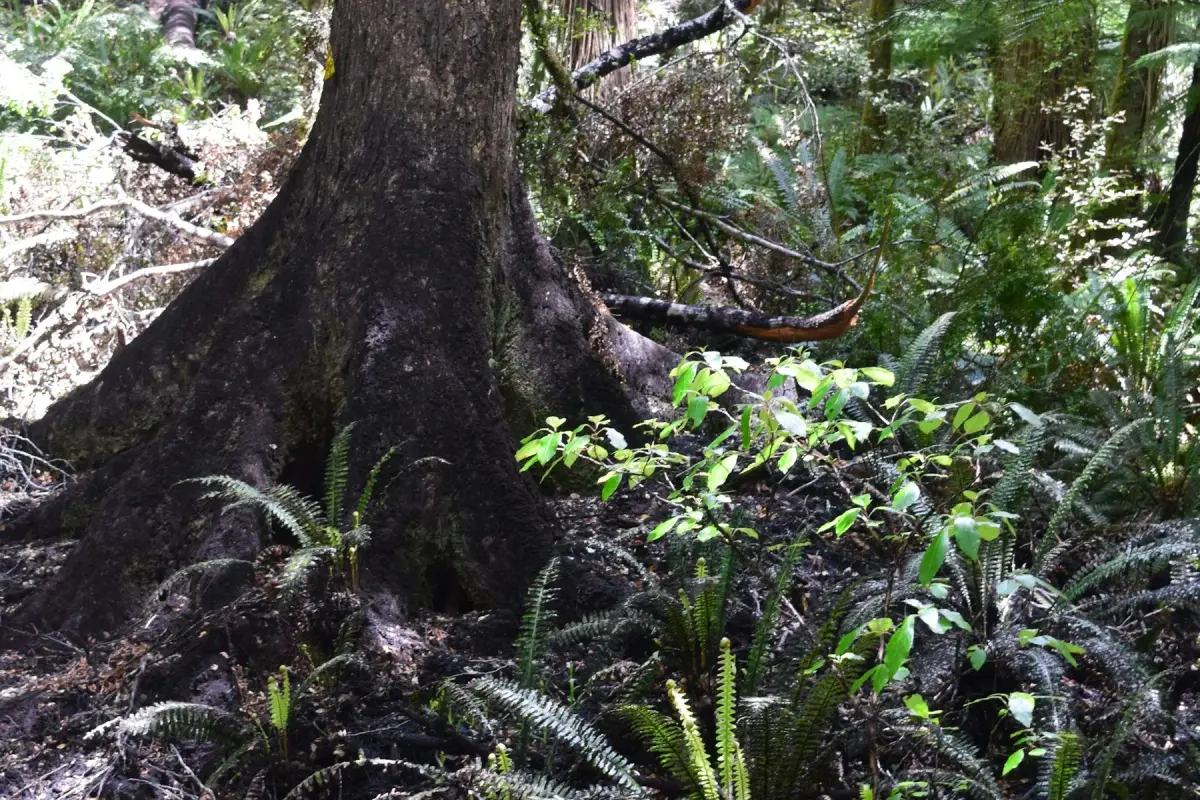
You leave the road behind and step beneath a dense canopy. Tree ferns rise overhead, moss-covered trunks line the trail, the air is cool and damp, and the scent of wet earth fills the forest. Everything feels as though a wild animal should appear around the very next bend.
Ten minutes pass. Then a few more, and you begin to wonder why the forest feels so empty.
Only when you slow down do you notice the first short song somewhere high above. Another bird answers. A flutter of wings comes from your right, followed a few seconds later by another unfamiliar call.
Little by little, you realize that this forest has never tried to impress you with what it shows. Its greatest richness lies in what you can hear, which is why a true New Zealand forest is something you listen to before you truly see it.
Why Two Similar Forests Can Sound Completely Different
In photographs, most New Zealand forests look remarkably alike. Towering ferns, beech trees, moss-covered branches, climbing vines and deep green canopies create the impression that every walk will offer the same experience.
In reality, they can sound completely different. One forest may greet you with only a handful of bird calls, while another is alive with an almost continuous chorus.
The reason lies in New Zealand’s history. For millions of years, the islands had almost no land-dwelling mammalian predators, allowing birds to take on ecological roles that mammals fill elsewhere. Some began foraging on the forest floor, others gradually lost much of their ability to fly, and some adapted to life after dark.
Everything changed when people introduced rats, cats, stoats, possums and other mammals. The transformation happened far too quickly, and many native birds were never able to adapt.
Some species disappeared altogether, others became critically rare, and several survived only in places where people actively protected them. That is why a beautiful forest and a forest full of birds are no longer necessarily the same place.
If you want to experience New Zealand’s extraordinary wildlife, it is worth choosing your destination for more than just the scenery. Sometimes, the place itself determines whether you will hear the forest as it was meant to sound.
If You Only Have One Day — Zealandia
If you find yourself in Wellington, it is difficult to imagine a better introduction to New Zealand’s forests.
Zealandia feels very different from a traditional wildlife park. There are no cages, no enclosures and no animals brought out for visitors. Instead, it is a real forest protected by a predator-proof fence that keeps most introduced mammals outside.
Because of that protection, bird species that had almost disappeared from the surrounding area have gradually returned. Some have even begun spreading beyond the sanctuary into the city itself.
The real attraction is not simply the number of rare birds. It is the feeling that the forest has found its voice again. After only a short walk, it becomes easy to understand why New Zealanders speak so passionately about restoring native ecosystems. They are not only bringing back individual species—they are bringing back the sound of the forest itself.
If your time is limited, Zealandia is one of the best places to understand that idea without leaving the city. Many visitors discover here, for the first time, that in New Zealand nature is often something you hear before you see.
If You Want to Spend an Entire Day Among Birds — Tiritiri Matangi
A completely different experience awaits on Tiritiri Matangi, an island not far from Auckland.
The journey begins even before the ferry departs. Visitors are asked to inspect their backpacks, clean their shoes and make sure they are not accidentally bringing mice, insects or plant seeds onto the island.
At first, these precautions may seem excessive. After a few hours, however, their purpose becomes obvious. They are one of the reasons why the island has become one of New Zealand’s greatest conservation success stories.
As you walk, the experience slowly changes. You stop less because you have seen a bird and more because you have heard an unfamiliar call and want to work out where it came from.
By the end of the day, many visitors notice an unexpected shift. They spend far less time searching with their eyes and far more time listening, and that is when the forest begins to reveal itself in an entirely different way.
If You Want to Experience a Forest That Feels Closest to the Original — Ulva Island
In the south of New Zealand lies a place that many nature lovers happily reshape their entire itinerary to visit.
Ulva Island, near Rakiura, has been completely cleared of introduced mammalian predators. As a result, its forest remains much closer to what New Zealand’s ecosystems looked like before rats, cats and stoats arrived.
You should not expect birds to be waiting beside the jetty. Instead, what makes this place extraordinary is the feeling that the forest is functioning as a complete living system.
If nature is one of your main reasons for visiting New Zealand, Ulva Island may well become one of the highlights of your entire trip. It is a destination worth choosing not for a single rare species, but for the rare chance to experience a forest that still sounds alive.
How Not to Miss the Best Part
The most common mistake is simply walking too much. New Zealand’s forests rarely reveal themselves to people who never stop, and sometimes standing still for just a few minutes is enough to notice sounds that your own footsteps had been drowning out.
Early morning and the hours before sunset are usually the best times to visit, when many birds become especially active. Instead of searching the trees first, try locating a bird by its voice before looking for it.
Do not be disappointed if you never manage to see most of the birds you hear. That is perfectly normal, as many native species are small, exceptionally well camouflaged and spend most of their lives high in the canopy.
If you want to improve your chances, consider joining a guided walk. Experienced guides not only recognise bird calls instantly, but also notice tiny movements that most visitors would never spot on their own.
A Few Things Worth Knowing Before You Go
If seeing a kiwi in the wild is one of your dreams, it helps to keep your expectations realistic. Even where kiwis live, sightings are never guaranteed, and people are far more likely to hear one before they ever see it.
Despite its worldwide fame, the kākāpō is a bird that almost no ordinary traveller will ever encounter. The species survives only on strictly protected islands with no public access.
If you meet a kea, no matter how friendly it seems, never feed it. These intelligent alpine parrots quickly learn to seek food from people, which eventually becomes dangerous for both the birds and visitors.
One final detail surprises many travellers. The fence surrounding a sanctuary does not make the forest less wild. Quite the opposite—it is the reason the forest can once again function according to its own natural rules.
A Forest Finding Its Voice Again
By the end of the walk, you realise your first impression was wrong. The forest was never empty; it simply never tried to capture your attention in the same way that tropical jungles or African savannas do.
Its life is quieter. It hides in brief songs, rustling wings and distant calls that are easy to overlook until you finally slow down and listen.
Only then does another layer of the journey become clear. The predator traps along the trails, the protective fences, the backpack inspections before boarding boats and decades of conservation work all exist for more than just saving endangered birds.
They exist so that one day the forest can once again fill with voices that no visitor has to wait long to hear. Perhaps that is why one of the most unforgettable experiences you can bring home from New Zealand can never be captured in a photograph.
It can only be heard.