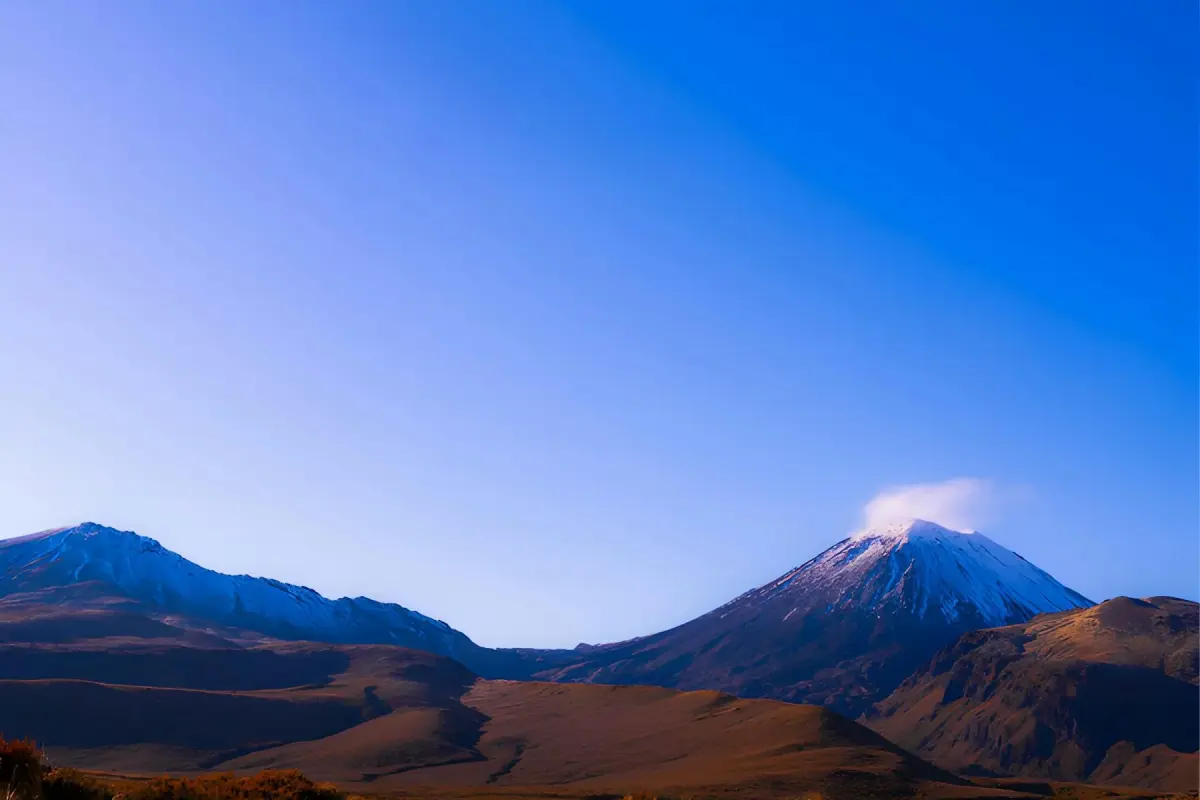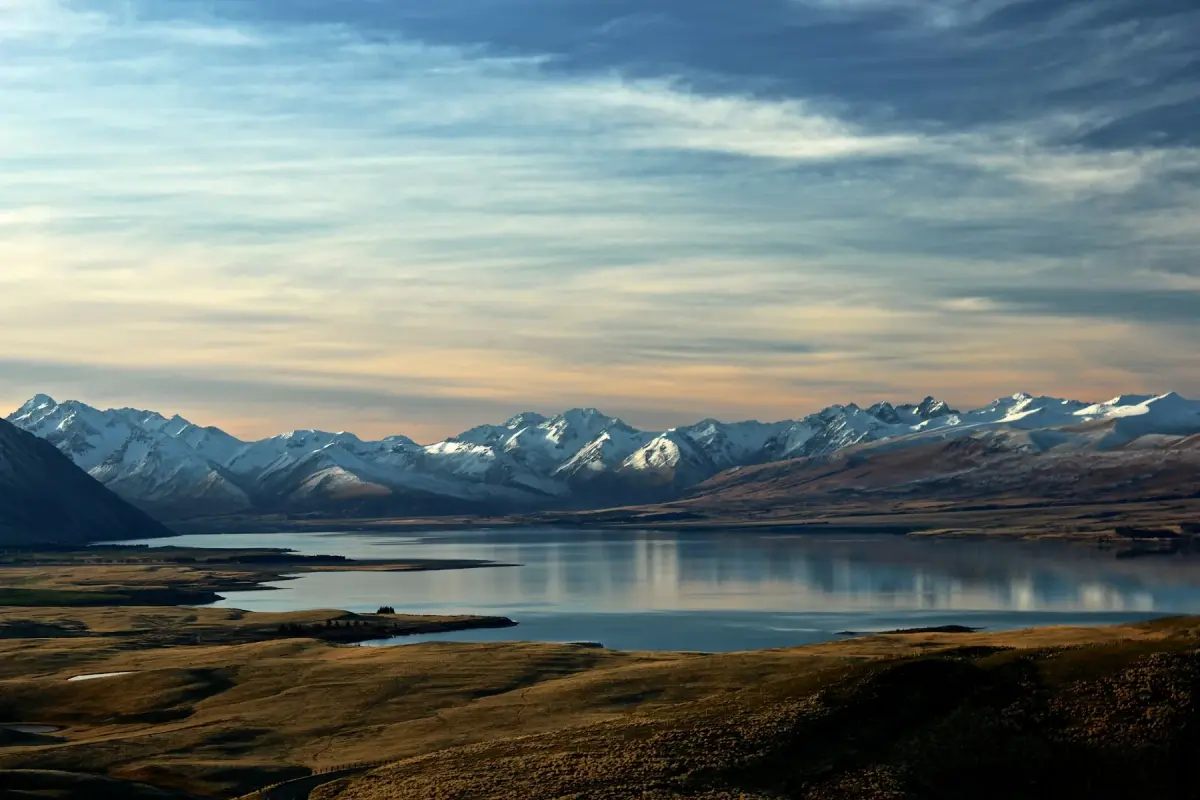
During the day, you admire the turquoise waters of Lake Tekapo, the snow-covered peaks of the Southern Alps, and the road leading toward Aoraki, New Zealand’s highest mountain. It feels as though the day has already shown you everything you came here to see.
But the real journey begins later.
In the evening, you step outside your cabin. The door closes behind you, taking the last warm light with it, and suddenly it is almost too dark. So dark that, for the first few seconds, you wonder if the photos online were exaggerated. There are only a handful of bright stars overhead. Nothing extraordinary.
Then a minute passes.
Then another.
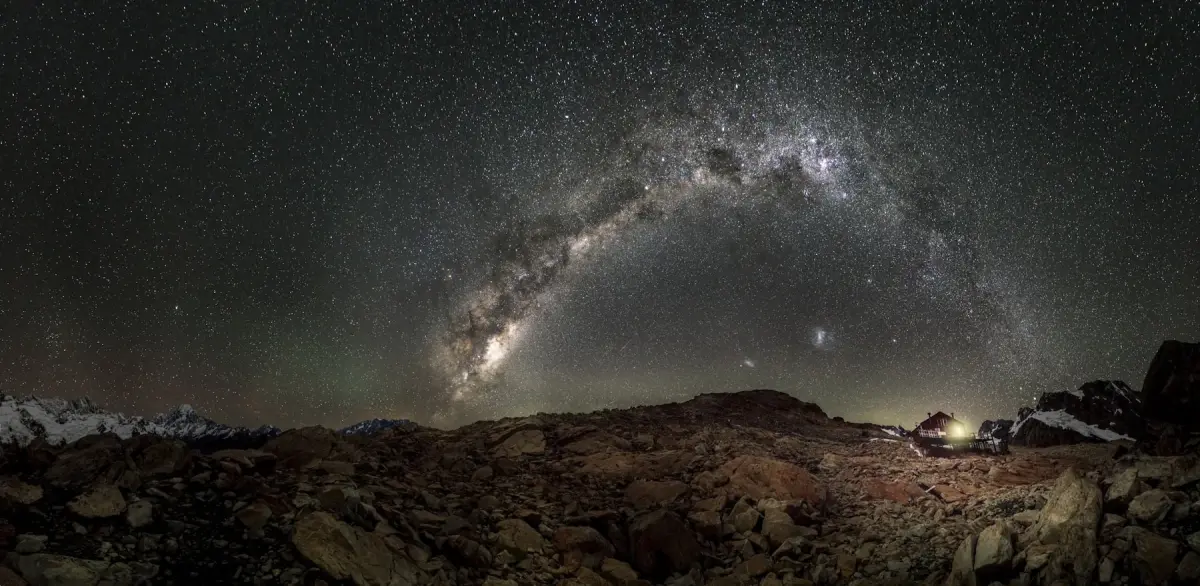
Slowly, your eyes adjust, and the world begins to reveal itself, as though someone is gently turning up the brightness on an invisible screen. Hundreds of new stars appear. A pale ribbon of the Milky Way stretches across the sky. Dark lanes begin to emerge within it, and then you notice two faint, hazy patches. At first they look like clouds, but they are not clouds at all. They are the Large and Small Magellanic Clouds—neighboring galaxies that can never be seen from Europe.
That is when you realize something unexpected.
Another landscape has been above your head all along.
Daylight was simply hiding it.
A Sky You Have Never Had Above Your Home
Most journeys change the land beneath your feet.
New Zealand changes the sky above your head as well.
If you grew up in Europe, your familiar celestial landmarks disappear. The North Star can no longer guide you. The Big Dipper is gone. Even the constellations you recognize seem strangely different. The Southern Cross, which until now existed only in photographs and on flags, becomes a real part of the sky, accompanied by two brilliant stars that help you find it.
The strange feeling does not come from seeing more stars.
It comes from realizing that your familiar map of the heavens no longer works. For the first time, you truly understand that you have reached the other side of the planet.
That is why New Zealand’s night sky is so difficult to capture in photographs. Pictures can show beautiful stars, but they cannot recreate the feeling of looking up and discovering that everything familiar has disappeared.
Here They Protect More Than Nature. They Protect Darkness.
Many people assume that skies like this still exist simply because there are not many people living nearby.
That is only part of the story.
The darkness survives because people have chosen to protect it. The Mackenzie region, home to Tekapo, Lake Pukaki, and Aoraki / Mount Cook National Park, lies within one of the world’s largest International Dark Sky Reserves.
Protecting the night means far more than switching off a few streetlights. Outdoor lights are designed to shine downward instead of into the sky. Brightness is carefully limited. Illuminated signs are controlled. Even the light escaping through skylights at night is kept to a minimum.
From a distance, these seem like tiny details.
Yet thousands of small decisions like these create the night you are standing beneath.
When you find yourself under the Milky Way, it is easy to forget that darkness can disappear too. It cannot be preserved once and then taken for granted. Every unnecessary light slowly erases another part of the sky.
That is why people here have chosen to protect the night in much the same way they protect forests, lakes, and glaciers.
Light Changes More Than the Sky
There is another reason darkness is considered worth protecting.
It is not only for people.
Artificial light confuses birds, alters the behavior of nocturnal animals, and disrupts natural ecosystems. What feels like a harmless floodlight to us can become a serious obstacle for wildlife, changing migration routes, feeding patterns, or the ability to find home.
Protecting dark skies, therefore, is about much more than astronomy or photography.
It is part of protecting nature itself.
We are used to thinking that nature needs clean rivers, clean air, and healthy forests.
New Zealand quietly reminds us that it needs something else as well.
It needs the night.
Don’t Expect the Photograph. Expect the Moment.
Almost every traveler makes the same mistake.
They expect the sky to look exactly like the vivid images created by long-exposure cameras. But human vision works differently. Your eyes will not turn the Milky Way into a bright purple arch stretching across the sky.
And that is not a disappointment.
The real experience comes from watching details slowly emerge. The longer you remain in darkness, the more your eyes begin to discover. Stars seem to appear one by one. The sky grows deeper. Space itself feels larger.
That is why it is worth resisting the temptation to check your phone every few minutes. A single bright screen is enough to undo much of your night vision and force your eyes to begin adapting all over again.
The Moon transforms the experience as well. On moonless nights, the Milky Way becomes richer and faint stars emerge more clearly. Under a full Moon, however, the mountains glow, the shoreline returns, and the landscape itself steps out of the darkness.
There is no perfect night.
There are only different kinds of night.
When You Realize the Most Precious Thing Is What Isn’t There
Perhaps the greatest impression New Zealand leaves has nothing to do with the stars themselves.
It has to do with absence.
The absence of an orange glow above the horizon. The absence of giant illuminated billboards. The absence of floodlights turning midnight into late evening.
We have lived with artificial light for so long that we have stopped noticing it.
Only when we finally stand beneath a truly dark sky do we realize how much of the night has quietly disappeared from our everyday lives.
In New Zealand, people have decided that night is not simply the empty space between two days.
It is another landscape.
As real as the mountains.
As real as the glaciers.
As real as the lakes.
And perhaps the most fragile of them all.