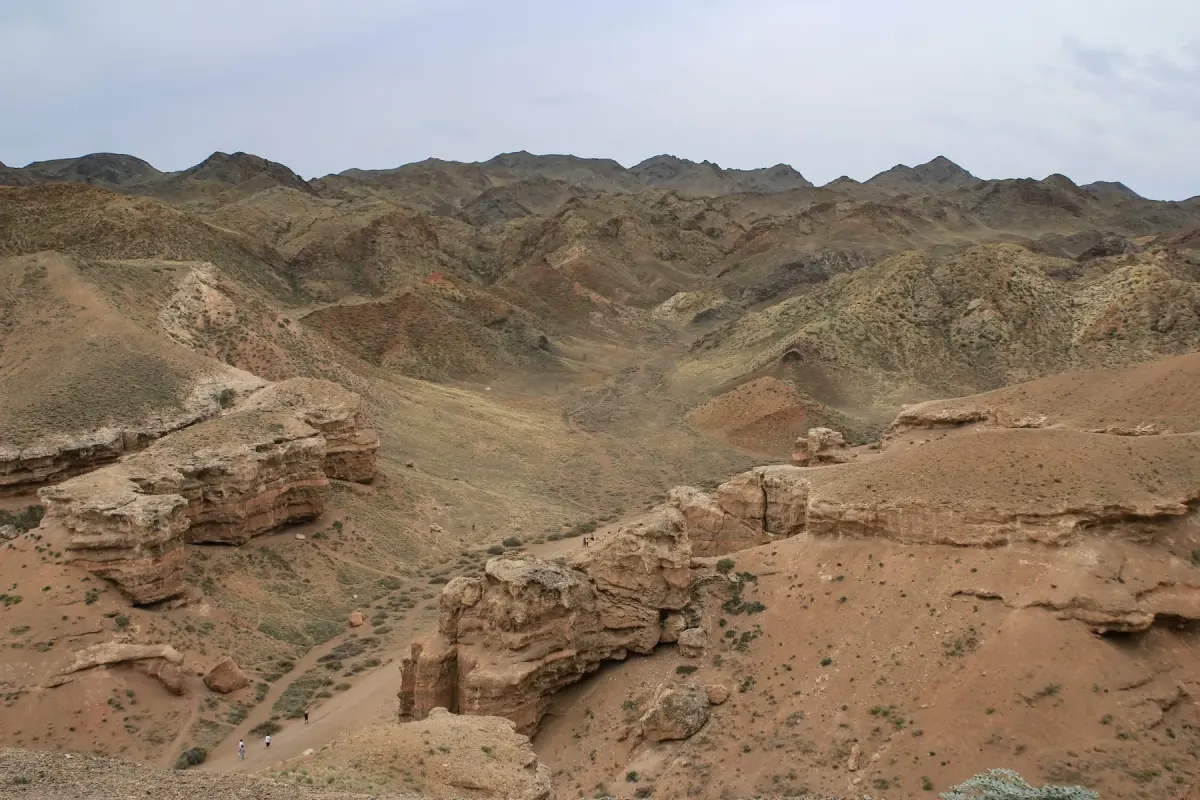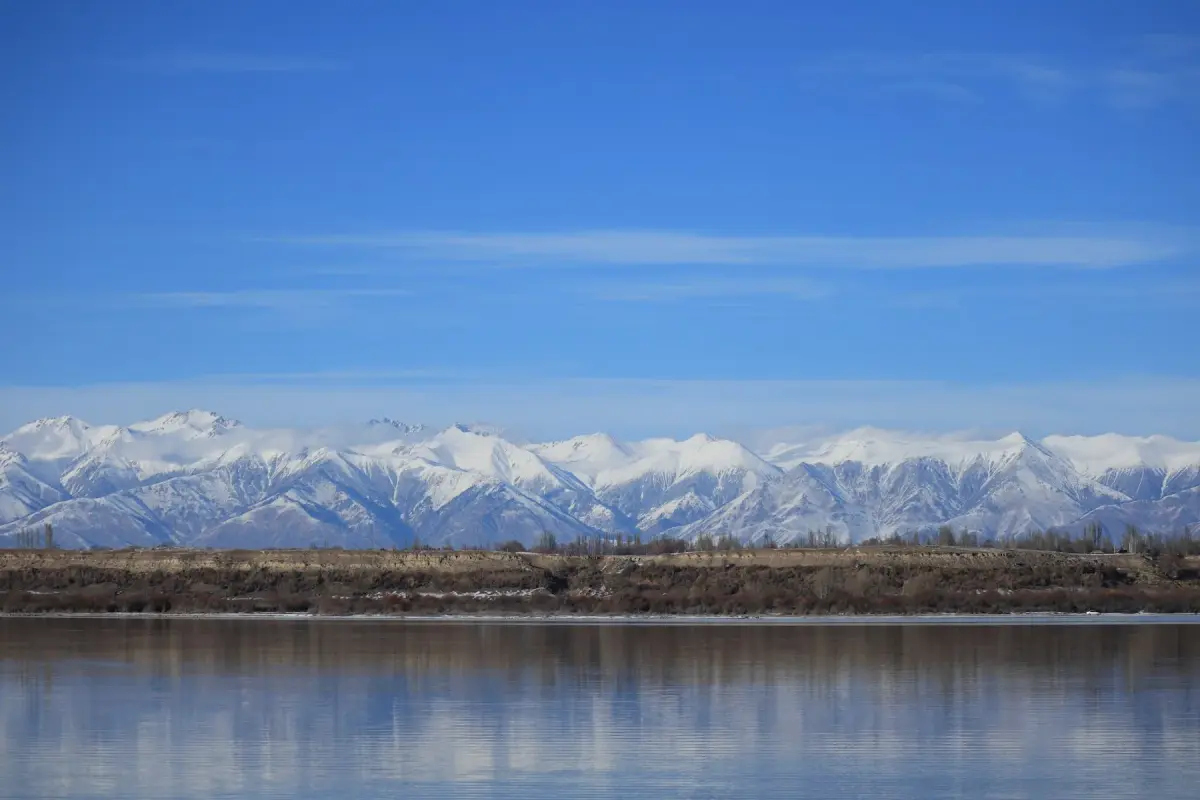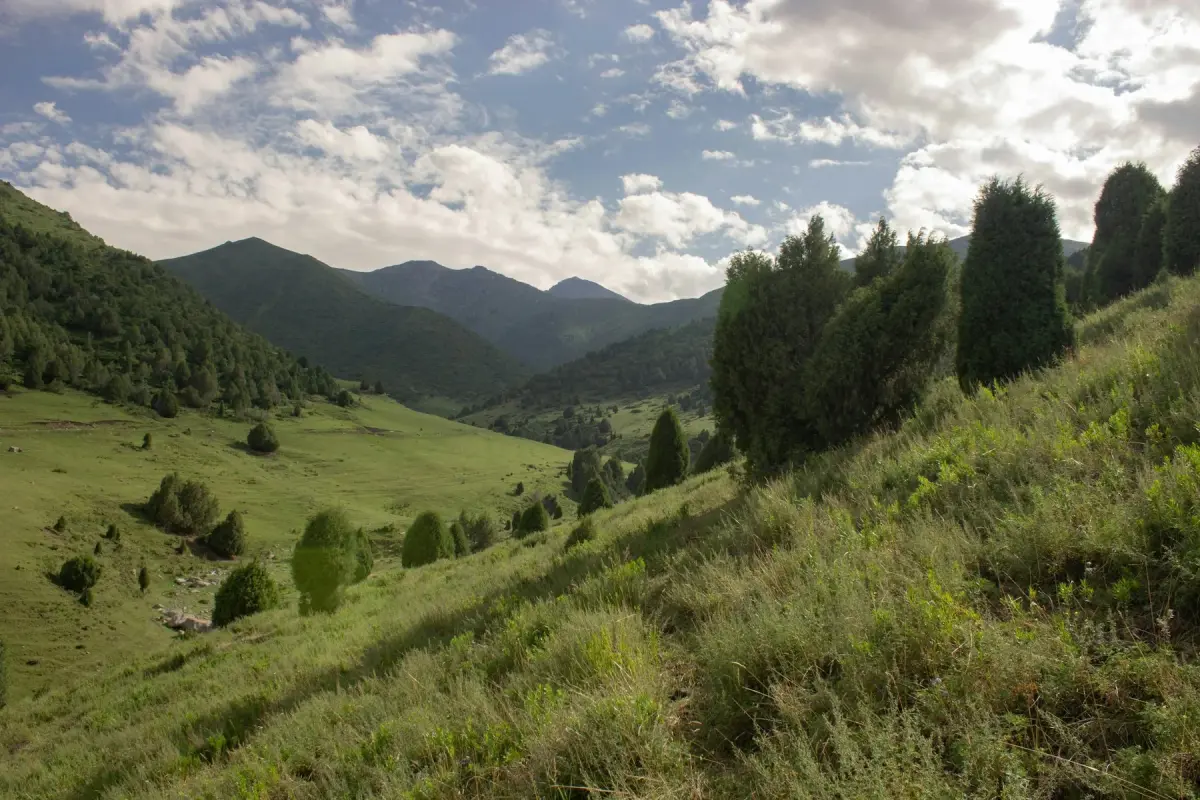
On a map, the Kyrgyz Range appears fairly simple.
A long mountain chain stretching south of Bishkek.
Looking at it from above, it is easy to assume that a journey through the range will consist of similar gorges, roads, and mountain passes.
In reality, that impression disappears quickly.
Over the course of several days, it is not only the scenery that changes. The character of the landscape changes as well. Forested valleys give way to open pastures. Narrow gorges lead into broad high-altitude spaces. Roads cross mountain passes and emerge into valleys that look nothing like the places left behind.
Because of this, traveling through the Kyrgyz Range rarely feels like moving along a single mountain system.
It feels more like exploring several different regions that happen to share the same mountain chain.
Where One Gorge Ends and Another Begins
On a map, the gorges of the Kyrgyz Range look similar.
Most begin at the foot of the mountains, follow rivers upstream, and gradually climb toward pastures and mountain passes.
After a few journeys, however, their differences become obvious.
Some quickly lead into forested terrain.
Others remain open for long stretches.
In some places, the river becomes the central feature of the landscape. In others, attention is drawn toward the surrounding peaks and slopes.
The distance between neighboring gorges is often much smaller than the difference between their landscapes.
Conifer Forests and Mountain Rivers
For many visitors, their introduction to the Kyrgyz Range begins in Ala-Archa.
The road gradually enters the valley, while the surrounding slopes grow higher and steeper.
The river accompanies the route almost continuously.
A similar feeling can be found in Alamedin Gorge.
Here too, conifer forests, mountain streams, and trails leading deeper into the mountains shape the landscape.
In places like these, it is easy to forget that completely different environments lie only a short drive away.
Jailoo
The high mountain pastures occupy a special place within the range.
During summer, yurts, horse herds, and seasonal shepherd camps appear across these open landscapes.
The scale of the surroundings changes.
Instead of narrow valleys, broad open spaces stretch across the mountains.
Some roads end here.
Others continue climbing higher.
It is difficult to think of a jailoo as a tourist attraction.
It remains a working landscape and a part of everyday life in the mountains.
Mountain Passes
In many mountain regions, a pass is the destination.
In the Kyrgyz Range, it often serves as a transition between two different parts of the journey.
The climb may take several hours.
Then the road reaches the high point.
After that, the landscape begins to change once again.
Familiar valleys disappear behind the horizon. New directions, new roads, and new scenery emerge ahead.
Because of this, mountain passes function less as viewpoints and more as gateways between landscapes.
Suusamyr
After several days among mountain gorges, the Suusamyr Valley feels unexpected.
The mountains remain nearby, yet the space between them becomes much wider.
Long roads cross open grasslands and broad pastures where the view can extend for many kilometers.
This is one of the places where the diversity of the range becomes especially noticeable.
Suusamyr is difficult to compare with Ala-Archa or Alamedin, even though all of them belong to the same mountain system.
Roads Between Landscapes
Over time, individual destinations begin to fade into the background.
What remains are not only the gorges and passes, but also the roads that connect them.
These roads link forested valleys, jailoo pastures, high-altitude terrain, and broad intermountain plains into a single journey.
Sometimes a landscape changes over the course of several hours.
Sometimes a single bend in the road is enough.
As a result, a route through the Kyrgyz Range feels less like moving from one attraction to another and more like traveling through a sequence of different landscapes.
How Much Time to Allow
One day is enough to visit a single gorge.
Several days allow for exploration of different parts of the range.
The more time available, the easier it becomes to notice how distinct these landscapes are from one another.
For that reason, travel through the Kyrgyz Range is rarely built around a single destination.
A slower route between gorges, pastures, mountain passes, and valleys reveals much more of the region than a series of quick stops.
Suggested Route
After arriving in Bishkek, we head to Ala-Archa. The day is spent exploring the valley, walking along the river, and taking the first routes into the mountains.
A relaxed day in the national park with time to explore different parts of the valley and spend more time in the mountains.
We move to a neighboring gorge and explore another side of the range. Despite its proximity to Ala-Archa, the landscape feels noticeably different.
A day among high mountain pastures, seasonal shepherd camps, and wide open valleys.
We travel to Issyk-Ata Gorge and explore its surrounding landscapes.
Another day in a different section of the range with new routes and changing scenery.
We climb one of the region’s best-known mountain passes and continue the journey beyond it.
A full day in Suusamyr, observing how the landscape changes after the gorges and passes.
Time to return to favorite locations or take additional walks and short excursions.
A relaxed end to the journey and the drive back to the capital.